



CeRDI Newsletter Winter 2026
In this issue:
- Message from the Director
- Visualising Australasia’s Soils - Upcoming enhancements
- Turning Environmental Data into Decision-Ready Information
- Preserving Victoria's Soil Knowledge
- Rainfall Mapper: New case studies and video tutorial
- Connecting with the soil science community
- CeRDI seminar explores the future of soil reporting
- Soil health in the spotlight at World Congress of Soil Science
- Celebrating Associate Professor Birgita Hansen's HDR leadership appointment
- Practical uses of AI in research and professional work
- HDR alumni spotlight: Dr Rekha Attanayake’s journey at CeRDI
- Double celebration for CeRDI HDR candidate Saundra LeClair
- CeRDI HDR student Pramod Gautum showcases the future of digital agriculture
- Hannah Faraone’s prize winning poster highlights hidden impact of litter on Australian birds
- CeRDI research shines as Rebecca Farnell takes out Federation University's 3MT
- CeRDI co-op intern recognised as finalist in Victorian International Education Awards
- Building connections across CeRDI
- CeRDI welcomes Dr Eithne Cahill to advance Australia’s dataspaces ecosystem
- Co-Designing the future of qualitative research with agentic AI
- Research publications
- About CeRDI
- Contact CeRDI
Message from the Director
 |
|
|
Distinguished Professor |
Welcome to the Winter 2026 edition of the CeRDI Newsletter.
In this edition of the newsletter, we showcase the breadth of research, innovation and collaboration taking place across our Centre and highlight the many ways our researchers, students and professional staff are addressing challenges of regional, national and international importance.
A strong theme in this edition is the value of data, digital infrastructure and research innovation in supporting evidence-based decision-making. Several articles highlight ongoing developments within the Soil CRC's Visualising Australasia's Soils (VAS) initiative, including new reporting capabilities, the preservation of Victoria's valuable soil knowledge through integration of Victorian Resources Online resources, and further enhancement of the Rainfall Mapper platform. Together, these projects demonstrate CeRDI's commitment to making complex environmental information more accessible, discoverable and useful for researchers, industry, government and the wider community.
This edition also highlights CeRDI's growing leadership in research infrastructure and digital innovation. We are pleased to welcome Dr Eithne Cahill, who joins the Centre to lead the next phase of the Australian Research Data Commons' Australian Dataspaces Program, strengthening our contribution to national data-sharing initiatives.
Research excellence remains central to our mission, and I am delighted to see the achievements of our Higher Degree by Research students and alumni recognised throughout this newsletter. We celebrate the completion of Dr Rekha Attanayake's PhD, significant milestones achieved by Saundra LeClair, the award-winning work of Hannah Faraone, Pramod Gautam's contributions to digital agriculture research, and Rebecca Farnell's success in Federation University's Three Minute Thesis competition. These accomplishments reflect not only the talent and dedication of our students, but also the supportive and collaborative research team and culture, within CeRDI.
People and partnerships are fundamental to a thriving research environment. We acknowledge Associate Professor Birgita Hansen's appointment as HDR Coordinator for the Sciences and her efforts to strengthen connections between researchers and HDR candidates through initiatives such as the recent CeRDI researcher and student gathering. In a time when many of us work remotely, opportunities to connect, collaborate and learn from one another are more important than ever.
Our researchers continue to make important contributions across diverse fields including soil stewardship, sustainability reporting, digital agriculture, biodiversity conservation, carbon accounting and agricultural productivity. The recent staff-led journal publications further demonstrate the real-world impact of CeRDI's research.
I hope you enjoy this edition and learning more about the exciting work taking place across our centre.
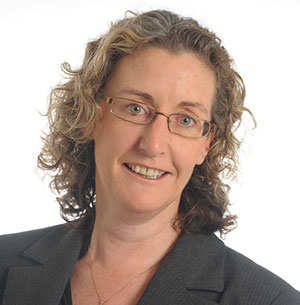
Distinguished Professor Helen Thompson
Director, CeRDI
September 2026
Visualising Australasia’s Soils - Upcoming enhancements
 |
|
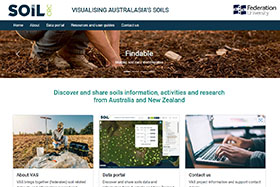
The Visualising Australasia’s Soils (VAS) project, which provides access to data and information about Australasian soils, was the subject of a recent CeRDI seminar. Associate Professor Peter Dahlhaus (VAS Project leader) and Andrew MacLeod (Manager Technical Projects) provided an update on several new developments currently being tested within the VAS portal, demonstrating the direction of future developments, and the team's ongoing efforts to improve access to soil and landscape information.
New Area Reporting Capability Under Development
One of the most significant developments is a new area reporting tool that allows users to select an area of interest and generate a summary report describing key soil, landscape and environmental characteristics.
-
Continue reading...
The reporting system is designed to bring together information from multiple sources into a single location, reducing the need for users to search across numerous separate databases and websites. The development team has also introduced more flexible report configuration tools, making it easier to manage the content included in reports.
While the area reporting feature is available nationally, the testing phase has focussed on Victoria (where the depth of data available was greatest) and the report will reflect that at the moment. The team will be continuing to enhance the report to make it more geographically sensitive in the near future.
Expanding Data Integration
The prototype reporting system draws on a wide range of datasets, including:
- Planning zones
- Local Government Areas (LGAs)
- Catchment Management Authorities
- Public land reserves
- Soil classification datasets
- Geology and geomorphology information
- Victorian Resources Online (VRO) datasets
The aim of the reporting system is to provide users with a consolidated view of information relevant to a selected area.
Improved Connections with Victorian Resources Online
The VAS-CeRDI team also demonstrated enhanced integration with Victorian Resources Online (VRO). Proposed report outputs can identify landforms, soil pits and other landscape information within a selected area, with links directing users to detailed VRO resources.
This integration is intended to improve data discovery and create a more seamless pathway between VAS and VRO information resources.
Enhanced Analytical Summaries
In addition to supporting data discovery, the new reporting functionality will provide summary analyses of selected areas. Examples demonstrated during the seminar included:
- Land use distributions by area and percentage
- Histograms for raster-based datasets
- Depth-to-water-table summaries
These features are intended to give users a quick overview of an area's characteristics without requiring specialised GIS analysis.
Climate Data and National Soil Information
Additional developments include the incorporation of climate information such as average rainfall and temperature, as well as links to national soil information collections and associated reports.
Further information about VAS:
Latest issue of the VAS newsletter

Building a legacy of soil data in Australia
(available on the Soil CRC website).
Turning Environmental Data into Decision-Ready Information
 |
|
How CeRDI is helping build the digital infrastructure needed for natural capital accounting in Australia
Australia has invested heavily in collecting environmental data. Governments and research organisations now make available a vast range of information on ecosystems, land use, water resources, biodiversity and environmental condition.
Yet despite this wealth of information, many organisations still struggle to use it effectively.
Environmental data is widely dispersed across multiple platforms, presented in different formats and often requires specialist technical expertise to access and interpret. As a result, organisations can spend more time trying to find and access data than using it to support decision-making.
-
Continue reading...
This challenge sits at the heart of a growing area of work within CeRDI: developing the digital infrastructure required to support natural capital accounting, sustainability reporting and nature-related decision-making.
Beyond data collection
As interest in natural capital accounting and nature-related financial disclosure continues to grow, pressure is growing to improve the accessibility and usability of existing information, as collecting new data is often prohibitively costly.
Frameworks such as the United Nations System of Environmental-Economic Accounting (SEEA) and the Taskforce on Nature-related Financial Disclosures (TNFD) require organisations to understand and report on their interactions with nature. However, meeting these requirements requires the ability to locate, integrate and interpret data from many different sources.
One of CeRDI’s key research interests is addressing this challenge through innovative data integration and visualisation technologies.
Demonstrating what is possible
A recent example is CeRDI’s collaboration with Climateworks Centre
on the Natural Capital Measurement Catalogue (NCMC) Data Visualisation Platform.Supported by the James N. Kirby Foundation
, the project builds on the Natural Capital Measurement Catalogue , a science-based reference catalogue of natural capital metrics, methods and data sources.As a result of an earlier CeRDI project, the Catalogue already links natural capital metrics to over 80 different data sources, representing a significant saving of time and resources for end users in finding relevant natural capital data. However, accessing and integrating data from many different sources is still time-consuming, and often technically challenging, requiring advanced spatial analytics skills.
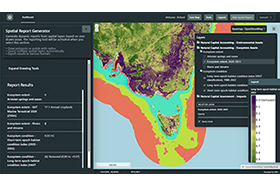
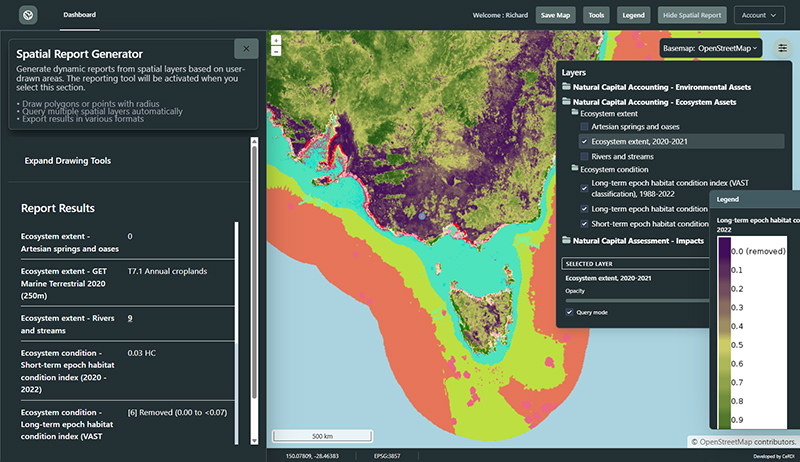
The new platform addresses this problem, demonstrating how diverse datasets can be brought together into a single online environment, where users can view, analyse and generate automated reports on selected areas, without requiring specialist expertise.
The current version integrates 26 datasets from 10 public data providers and enables users to combine information on ecosystem extent, ecosystem condition, land use, soils, water scarcity and other environmental characteristics.
Importantly, the project is not simply about creating another map viewer.
Its real purpose is to reduce the time, cost and technical expertise required to transform environmental data into useful information.
The challenge is not a lack of environmental data. The real challenge is being able to find, access, integrate and use existing data efficiently. Digital infrastructure that lowers these barriers is essential if natural capital accounting is to move into mainstream practice
- Professor Francisco Ascui, CeRDI
Building digital infrastructure to democratise natural capital dataThe project also highlights a broader issue facing natural capital accounting in Australia.
Significant investment has been made in developing environmental datasets and accounting frameworks. However, there has been comparatively less attention given to the systems needed to connect these resources and make them readily usable by decision-makers.
CeRDI’s work increasingly occupies this space between environmental science and practical application.Whether supporting natural capital accounting, sustainability reporting, environmental benchmarking or spatial analysis, the common challenge is turning complex environmental information into forms that can be used by people who are not necessarily environmental specialists.
The ability to automatically discover, integrate, analyse and report environmental information is likely to become increasingly important as organisations face growing expectations around sustainability and nature-related reporting.
Looking ahead
The NCMC Data Visualisation Platform provides an example of what can be achieved when environmental accounting expertise is combined with advanced digital innovation.
For CeRDI, it forms part of a broader research agenda focused on environmental data integration, digital public infrastructure and decision-support tools that help organisations better understand their impacts and dependencies on nature.
By making environmental information easier to access and use, projects such as this can help shift effort away from data-wrangling and towards better-informed environmental decision-making.
Explore the NCMC Data Visualisation Platform here
. We welcome your feedback.
Preserving Victoria's Soil Knowledge
 |
|
For many years, Victorian Resources Online (VRO) was one of Victoria's most important sources of soil, land and environmental information. Developed and maintained by Agriculture Victoria, it brought together the results of decades of soil surveys, land assessments, field observations and research into a single online resource. By the time it was decommissioned in 2025, VRO contained more than 16,000 information pages covering soil properties, land characteristics, landscape descriptions, maps, reports and other valuable reference materials from across the state.
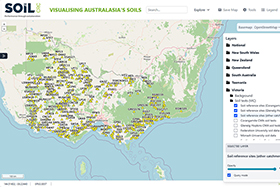
With the archiving of the VRO website, there was a risk that this extensive body of knowledge could become difficult to discover and use. Through collaboration between CeRDI and Agriculture Victoria, permission was secured to preserve access to this important resource by integrating links to archived VRO content within the Visualising Australasia’s Soils (VAS) platform.
As a result, soil scientists, consultants, land managers, researchers and policymakers can continue to access this rich source of information.
-
Continue reading...
The addition of VRO content significantly enhances the value of VAS. Alongside contemporary soil datasets and visualisation tools, users can now access historical soil descriptions, profiles, maps, graphs, observations and reports from across Victoria. This provides valuable context for understanding soil characteristics, landscape change and land management decisions over time.
Maintaining access to these resources delivers substantial benefits for industry, government and research. By drawing on historical investigations and established knowledge, users can support evidence-based decision-making, avoid unnecessary duplication of effort and build on decades of investment in soil science. The information continues to inform agricultural planning, natural resource management, environmental decision-making and scientific research throughout Victoria.
The integration of VRO content within VAS highlights the importance of preserving and reusing valuable digital knowledge assets. While the original VRO platform has been archived, its legacy continues through VAS, connecting users with both current soil information and a significant historical record of soil and land resource knowledge. This also demonstrates the integration of valuable historical soil and landscape information into a modern, accessible platform. The successful integration of Victorian data provides a model for incorporating similar resources from other states and territories. Expanding VAS in this way would support a more connected and accessible approach to soil information across Australia, helping to preserve important legacy datasets while improving access for future users.
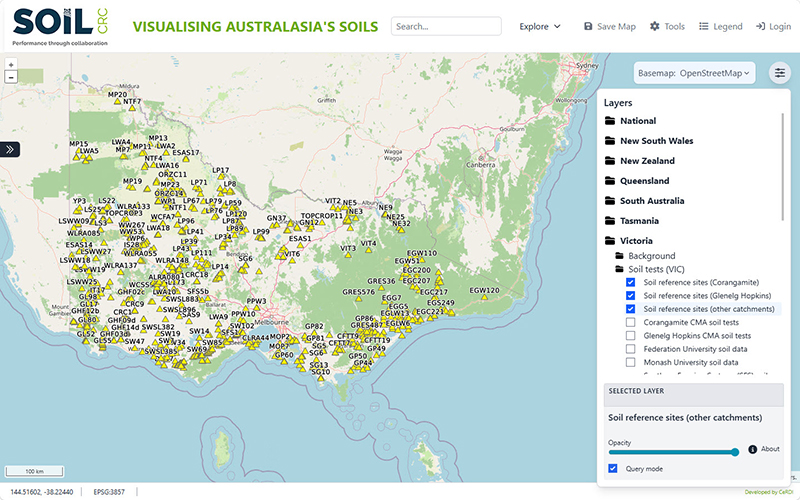
To explore the archived VRO content within VAS, visit the Soil Reference Sites on the platform
.
Rainfall Mapper: New case studies and video tutorial
 |
|
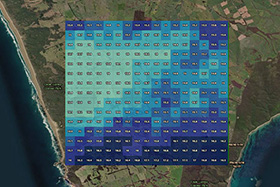
Understanding how rainfall varies across a landscape can be challenging when relying on data from a single rain gauge. To address this, CeRDI researcher Dr Peter Weir, working with the CeRDI technical team, developed the Rainfall Mapper , a tool that enables users to explore rainfall data alongside soil, landscape and land management information. It allows users to view historical rainfall patterns across entire paddocks, farms, catchments and regions.
Rainfall Mapper is available through the VAS platform and uses Bureau of Meteorology Rainfields3 data to provide detailed rainfall maps, helping users explore where and when rainfall occurred across a selected area.
By presenting rainfall across a landscape rather than at a single point, Rainfall Mapper provides valuable insights into how rainfall distribution may influence soil moisture, agricultural production, land management and environmental outcomes. This gives users a clearer picture of rainfall variability and supports more informed decision-making for a wide range of land-use applications.
-
Continue reading...
Planned enhancements to the tool include increasing the size of areas that can be analysed and making the tool easier to use on mobile devices. This work is supported through additional funding from the Soil CRC and will continue over the next six months. Further information about this is now available on the Soil CRC website: soilcrc.com.au/projects/rainfall-mapper/
To showcase the tool's practical applications, a series of case studies has been developed using examples from Victoria, New South Wales and Western Australia. These real-world examples demonstrate how rainfall patterns vary significantly across nearby locations and highlight how spatial rainfall information supports agricultural decision-making, catchment management, environmental monitoring and land-use planning. The case studies are available at: vas.soilcrc.com.au/rainfall-mapper/rm-case-studies
A short video tutorial has also been released to help users with Rainfall Mapper. The video introduces the key features of Rainfall Mapper, including selecting an area of interest, choosing dates, generating rainfall maps, interpreting results, and viewing or downloading rainfall charts. The video is available at: vas.soilcrc.com.au/rainfall-mapper/how-to-video
Connecting with the soil science community
 |
|
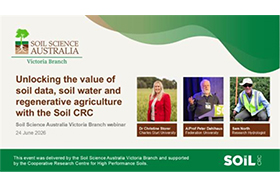
In June, the Soil Science Australia Victoria Branch held a seminar to examine how improved soil data and water understanding can support regenerative agriculture.
Three presentations were delivered during the session. CeRDI’s Associate Professor Peter Dahlhaus presented insights from the Soil CRC’s Visualising Australasia’s Soils (VAS) project. The presentation demonstrated how advanced soil data visualisation enhanced decision-making by making complex information more accessible and actionable across the agricultural sector.
Pete’s presentation illustrated how VAS is making complex soil data accessible to the public, enhanced by well-designed visual tools and statistics. A key message from the talk was the importance of VAS in making Australia’s soil data from all sectors visible and reusable within defined governance principles, ensuring it is self-sustaining and the legacy of VAS is one that is inherently useful for research and education.
-
Continue reading...
The seminar was well attended by researchers and practitioners and delivered a concise and practical overview of current research and tools, with a strong emphasis on applications for supporting more informed and sustainable farming systems.
The webinar recording is available at: vimeo.com/1216456640
CeRDI seminar explores the future of soil reporting
 |
|
|
Photo by Roman Synkevych |
|
How can organisations report on soil health in a way that is meaningful, consistent, and comparable across different farming systems? This was the question explored by Professor Francisco Ascui during a CeRDI research seminar in June, where he shared findings from a four-year research program conducted with colleagues at Charles Sturt University through the Soil CRC project, Activating Financial Markets for Soil Stewardship .
The project was initiated to improve the way soil health is reported, helping farmers, businesses, investors, and supply chain partners better understand and benchmark soil stewardship outcomes.
The research began in 2022 through collaboration with the Australian Accounting Standards Board (AASB) at a time of growing interest in sustainability reporting. As climate and sustainability disclosures gained prominence globally, the project examined how soil health could be more effectively incorporated into reporting frameworks.
-
Continue reading...
To investigate the issue, the research team undertook three streams of work: analysing sustainability reporting practices among major agribusinesses, interviewing industry stakeholders, and developing a conceptual framework for soil reporting.
It was found that while sustainability reporting is now commonplace, meaningful reporting on soils remains limited. Although all 15 major ASX-listed agribusinesses reviewed included sustainability-related information, fewer than half mentioned soils, and only a small number reported quantitative soil metrics. Even organisations directly managing agricultural land tended to report only limited measures, such as ground cover or soil testing results.
Industry stakeholders were supportive of more comprehensive soil reporting. Interviews with agribusiness representatives, investors, lenders, consultants, and accounting professionals highlighted a desire for reporting that moves beyond broad narratives to include measurable indicators and clear targets. At the same time, participants recognised the challenges of defining and measuring ‘soil health’ consistently across different environments and production systems.
A recurring theme identified in the research was the importance of providing context. Investors and lenders noted that soil metrics are most useful when accompanied by benchmarks or baselines that help explain whether a reported result reflects good or poor performance. Stakeholders also stressed that any reporting framework must be practical, cost-effective, and make use of existing data wherever possible.
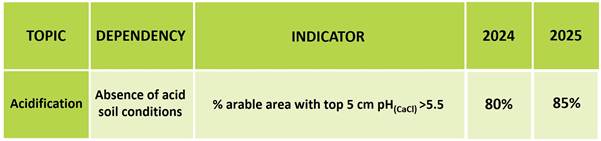
Professor Ascui commented that one of the greatest challenges is the diversity of agricultural systems. Soil characteristics that are important for one enterprise may be less relevant for another. For example, a soil pH level considered too acidic and therefore unsuitable for wheat production may be entirely appropriate for blueberry cultivation. This context dependence makes direct comparisons of measured soil parameters between farms and industries difficult.
To address this challenge, the research team prepared a framework based on context-specific indicators linked to defined thresholds or targets. Rather than reporting raw soil measurements alone, organisations could report the proportion of land or production that meets a defined target or threshold, such as a minimum value required to maintain current productivity. This approach would allow different farming systems to be assessed against industry-relevant thresholds while still producing information that is comparable in aggregate across a supply chain or loan portfolio. Such an indicator report might look like the example for a wheat producer shown below.
The seminar concluded with a discussion of benchmarking and a demonstration of CeRDI’s prototype spatial benchmarking tool. While normalised indicators provide the basis for comparability across reports, understanding what the reported values mean in terms of performance requires some form of benchmarking. One method is to compare current with past performance (temporal benchmarking); another is to compare with the performance of similar properties (spatial benchmarking). CeRDI’s prototype spatial benchmarking tool allows a user to do exactly that, finding and aggregating comparable publicly available data from properties in the same bioregion with the same soil type and ecosystem type (e.g. cropping or pasture).The research highlights an important opportunity to strengthen sustainability reporting across the agricultural sector. By developing more consistent and practical approaches to soil reporting, organisations can better demonstrate both their impact on soil resources and their reliance on healthy soils, supporting more informed decision-making and improved long-term stewardship of Australia’s agricultural landscapes.
Soil health in the spotlight at World Congress of Soil Science
 |
|
CeRDI's Associate Professor Nathan Robinson recently represented Federation University Australia at the 23rd World Congress of Soil Science in Nanjing, China, and shared leading Australian research with a global audience of soil scientists, industry leaders, policymakers and students.
Held every four years and organised by the International Union of Soil Sciences, the congress brought together more than 4,000 delegates from around the world to discuss the latest advances in soil science and strengthen international collaboration across research, government and industry.
Nathan, who attended the congress in his role as Soil CRC Program Leader, focused on improving soil data management and identifying key soil performance indicators. Nathan presented research on soil indicators and their role in improving soil management and agricultural sustainability. His presentation highlighted the importance of developing robust measures of soil condition that can support better decision-making for farmers, industry and policymakers.
-
Continue reading...
The Congress showcased the strong contribution of Australian soil science, with almost 100 Australian delegates participating in the congress. Alongside Nathan, Soil CRC representatives included researchers presenting work on soil microbial indicators and agricultural sustainability, demonstrating Australia's leadership in addressing global soil challenges.
Nathan's participation reflects CeRDI’s ongoing commitment to delivering impactful research that supports sustainable agriculture through data-driven and evidence-based approaches. His leadership within the Soil CRC and contribution to international scientific discussions reinforces CeRDI's growing reputation as a hub for innovative agricultural and environmental research.
The congress also provided an opportunity for delegates to learn from emerging global developments in the field. Soil CRC CEO Dr Michael Crawford noted the rapid growth of China's soil science capability, particularly among early-career researchers, as well as renewed interest in soil biology driven by advances in analytical and statistical methods. He also highlighted the strong focus on soil organic carbon research, from measurement through to management, across local and global scales.
By contributing to conversations at one of the world's most significant soil science events, Nathan is helping ensure Australian research remains at the forefront of efforts to improve soil health, agricultural productivity and environmental sustainability.
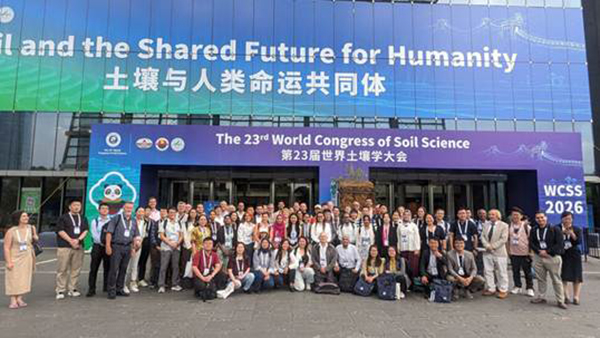
Image source: Soil CRC
Celebrating Associate Professor Birgita Hansen's HDR leadership appointment
 |
|
|
Principal Research Fellow, |
|
Federation University Australia is strengthening support for its Higher Degree by Research (HDR) candidates through enhanced academic and administrative guidance. A key part of this commitment is the work of HDR Coordinators, who connect student researchers, supervisory panels, and the Graduate Research School to help candidates successfully navigate their research journey.
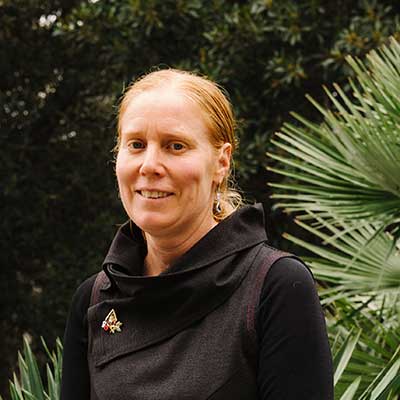
CeRDI is proud to celebrate the appointment of Associate Professor Birgita Hansen as HDR Coordinator for the Sciences. This important leadership role reflects her longstanding commitment to research excellence, mentorship, and student success.
HDR coordinators play a vital role in supporting candidates by overseeing key milestones such as confirmation of candidature, reviewing extensions and supervisory changes, and providing an independent point of support when challenges arise. Their work helps create a positive and productive research environment for HDR students.
-
Continue reading...
Birgita brings to the role her experience with multidisciplinary research and research leadership. As a member of the Graduate Research School Board and an experienced HDR supervisor, she has a deep understanding of the opportunities and challenges facing research candidates today. Her expertise across both environmental science and eResearch positions her strongly to support the next generation of scientific researchers.
This appointment highlights Federation University's ongoing investment in research excellence and student success, and CeRDI looks forward to the positive impact Associate Professor Hansen will make in supporting HDR candidates across the Sciences.
More information about Federation University’s Graduate Research School can be viewed here
.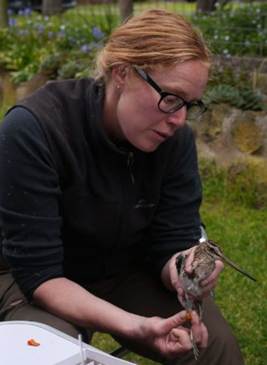
Associate Professor Birgita Hansen
Image source: International Wader Study Group
Practical uses of AI in research and professional work
 |
|
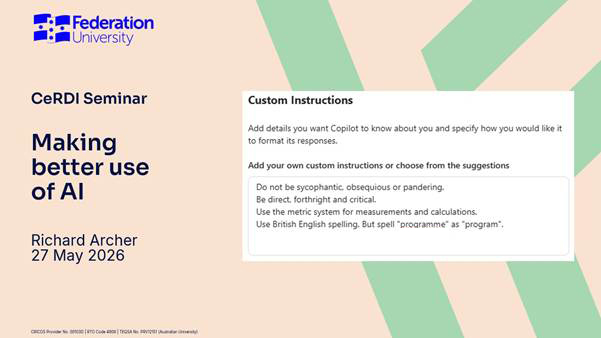
CeRDI staff recently attended a seminar presented by CeRDI Program Delivery Manager Richard Archer, who provided an overview of current artificial intelligence (AI) technologies, practical applications, and emerging opportunities for researchers and professional staff.
The session explored how AI tools have evolved and how they can be used more effectively to support daily work. Drawing on his own experience, Richard demonstrated ways researchers can tailor AI systems through customised instructions, allowing tools to consistently follow preferred writing styles, spelling conventions, and communication preferences. Richard highlighted the time saving benefits and improvements to consistency across multiple interactions with AI platforms.
A key theme of the presentation was the growing role of AI in research and grant development. Richard shared examples of using AI to assist with preparing funding applications, including generating draft content based on application requirements and project information. He noted that researchers can choose different levels of AI involvement, from using generated text as a starting point for substantial rewriting through to incorporating selected AI-generated content directly into draft applications.
-
Continue reading...
Importantly, the seminar also addressed responsible AI use in academic settings. It was emphasised that researchers should be familiar with institutional and publisher guidelines governing the use of AI in research outputs. Understanding where AI can and cannot be used remains critical for maintaining research integrity and meeting publication and funding requirements.
The discussion prompted valuable reflections on the perception of AI-generated writing within academia. While AI continues to attract debate, participants considered how careful editing and adaptation of AI-generated content can help ensure that final outputs reflect an author's own voice and disciplinary conventions. Richard noted that many of the characteristics often associated with academic writing, such as formal language and structured presentation, can make it difficult to distinguish between carefully edited AI-assisted text and traditionally authored documents.
Another important message from the session was the need for balance when using AI tools. While AI can generate extensive responses quickly, Richard cautioned against relying on lengthy outputs when concise, targeted information is more useful. The ease of content generation can sometimes lead users to produce more material than is necessary, highlighting the importance of critical judgement and thoughtful communication.
The seminar also featured contributions from CeRDI Manager Technical Projects Andrew MacLeod, who shared examples of AI applications developed within the technology team, demonstrating how AI can support practical problem-solving and innovation in workplace settings.
The session concluded with a discussion about sharing AI prompts and resources with colleagues through SharePoint, helping staff build their skills and adopt effective AI practices across the organisation. Participants were encouraged to continue exploring how AI can enhance productivity while remaining mindful of quality, accuracy, and ethical considerations.
As AI technologies continue to develop rapidly, the seminar provided a timely reminder that their greatest value lies not in replacing expertise, but in supporting staff to work more efficiently, communicate more effectively, and focus their efforts on higher-value research and professional activities.
HDR alumni spotlight: Dr Rekha Attanayake’s journey at CeRDI
 |
|
|
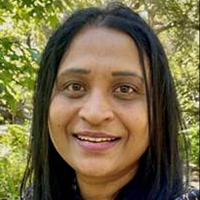
Dr Rekha Attanayake |
|
After six years of dedicated research, Dr Rekha Attanayake successfully completed her PhD at CeRDI in 2026, making an important contribution to improving agricultural decision-making and soil management.
Her research focused on assessing agricultural lime quality indices to improve lime recommendations and help address soil acidity constraints in farming systems. Her thesis, Developing New Methods to Help Farmers Make Accurate Decisions for Lime Use, explored innovative approaches to support farmers in making more informed and effective lime application decisions.
Reflecting on her HDR journey, Rekha chose to study in CeRDI because of its strong reputation in agricultural and environmental research, its collaborative culture, and the opportunity to work alongside experienced researchers:
From the beginning of my candidature, I felt welcomed into a supportive and encouraging research community that fostered both academic excellence and personal growth.
Double celebration for CeRDI HDR candidate Saundra LeClair
 |
|
|
HDR student Saundra LeClair. Image |
|
CeRDI is delighted to congratulate HDR student Saundra LeClair on successfully completing her Confirmation of Candidature. Saundra delivered an excellent report and presentation, demonstrating the quality and significance of her research, and we are pleased to announce that she has been formally confirmed.
The occasion was particularly special because it marked not only her candidature confirmation, but also approval for her upgrade from a Master's degree to a PhD. This milestone reflects the strength of Saundra's research program and her outstanding progress as an emerging researcher.
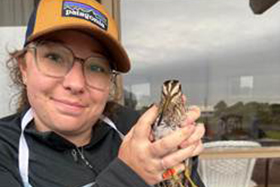
Saundra has also recently completed a HDR internship with the Tasmanian Land Conservancy (TLC), where she contributed to a range of conservation and research activities. While her work included plenty of field-based snipe research, the internship provided opportunities to engage with broader conservation projects and gain valuable industry experience.
-
Continue reading...
As part of her internship reporting, Saundra produced a blog for the TLC website summarising her summer fieldwork at the organisation's Silver Plains Reserve in Tasmania's Central Highlands. Her project focuses on Latham's snipe (Gallinago hardwickii), a migratory shorebird that remains surprisingly understudied during its non-breeding season in Australia. Saundra’s blog can be viewed here
.Adding a personal touch to the story, while conducting field work with colleagues in Peterborough, Victoria, one of the birds captured, banded and fitted with a GPS tracker during the project was named "Saundra" in recognition of her contribution to the research. Read more about it here
.As the recipient of the 2026 Bird Conservation Scholarship, Saundra is investigating how Latham's snipe use wetlands and surrounding habitats and how different management practices may influence habitat suitability. These elusive birds migrate each year from breeding grounds in Japan and eastern Russia to eastern Australia, travelling thousands of kilometres along the East Asian-Australasian Flyway.
A nationally significant population occurs at Silver Plains Reserve, where extensive peatlands, marshes and wet grasslands provide important summer refuge habitat. Unlike many shorebirds, Latham's snipe are highly cryptic. They spend daylight hours concealed in dense vegetation and emerge primarily at night to forage, making them particularly challenging to study.
Saundra's research seeks to understand how the birds select their daytime roosting sites. Through detailed field measurements, vegetation assessments, water-depth surveys and habitat analyses, she is building a clearer picture of the environmental features that snipe rely upon for shelter and survival. By comparing locations used by birds with similar but unused habitat, the project is helping reveal the subtle characteristics that make certain wetlands suitable.
The findings will contribute to improved wetland conservation and management, helping land managers protect and restore habitats that support this vulnerable migratory species. Through her work, Saundra is not only advancing scientific understanding of Latham's snipe but also generating practical knowledge to support conservation outcomes across Tasmania and beyond.
Congratulations to Saundra on her confirmation, PhD upgrade, successful internship, and the impressive progress of her research. We look forward to following the next stages of her PhD journey.
CeRDI HDR student Pramod Gautum showcases the future of digital agriculture
 |
|
CeRDI HDR student Pramod Gautam is contributing to research exploring the future of Australian agriculture through his role as a Research Assistant on an AEA Ignite-funded project led by Prof. Harpinder Sandhu through the Ararat Jobs and Technology Precinct (AJTP), in partnership with Adelaide University.
In addition to his PhD research, Pramod is also working as a Research Assistant on the project, providing an opportunity to apply and further develop his research skills while exploring how digital technologies can support productivity, sustainability and natural resource management in broadacre farming systems.
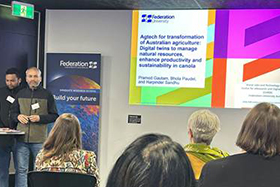
Pramod recently attended Federation University’s Higher Degree by Research Conference, where he presented work from the project focused on developing a digital twin for a commercial canola farm in the Ararat region of Victoria. The project combines real-time monitoring, artificial intelligence (AI), machine learning and predictive modelling to create a virtual representation of farm operations that can support more informed management decisions and sustainable farming practices. The project also involves Bhola Paudel, a Higher Degree by Research student from Federation University’s Future Regions Research Centre (FRRC), who is also working as a Research Assistant on the AEA Ignite-funded project. Together, Pramod and Bhola are contributing to research demonstrating how emerging digital technologies can be applied to real-world agricultural challenges.
-
Continue reading...
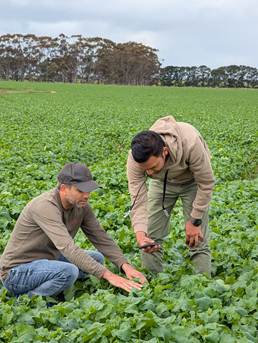
Using sensor data and AI-powered analytics, the digital twin is designed to continuously monitor crop and environmental conditions, creating a dynamic and interactive model of the farm. This can provide farmers with real-time insights into crop performance, help identify emerging issues and allow different management options to be assessed before they are implemented in the field.
A key focus of the project is the development of tools (Digital Twins) that help identify plant growth issues, pests and diseases, while also supporting more efficient use of resources. By enabling farming scenarios to be tested virtually, the technology holds real potential to improve decision-making, increase productivity and strengthen resilience to changing environmental conditions.
Pramod’s involvement highlights the broader professional and research opportunities available to HDR candidates to contribute their expertise beyond their individual PhD projects. His work on the AEA Ignite-funded initiative, alongside Bhola and project partners, demonstrates the value of interdisciplinary collaboration and the application of research skills to practical challenges facing the agricultural sector.
As digital agriculture continues to evolve, research projects such as this position Federation University at the forefront of developing data-driven approaches/solutions that can support more productive, sustainable and resilient farming systems.
Hannah Faraone’s prize winning poster highlights hidden impact of litter on Australian birds
 |
|
|
HDR student Hannah Faraone |
|
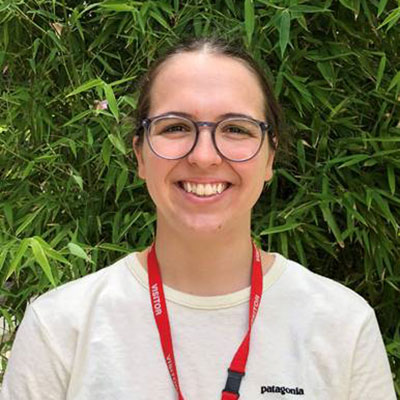
Congratulations to CeRDI HDR student Hannah Faraone on her prize-winning poster presentation at the 2026 Federation University Higher Degree by Research Conference. The award of Best Poster Presentation recognised the quality and significance of her research into how Australian birds interact with human-made litter.
Supervised by Associate Professor Birgita Hansen, Hannah's research uses citizen science data to investigate the often-overlooked ways litter affects bird behaviour. Her award-winning poster showcased findings from a study that analysed 272 photographs submitted by members of the public, capturing interactions between litter and 65 bird species from across Australia.
The research findings to date reveal that birds interact with litter in far more ways than previously recognised. While well-known behaviours such as swallowing litter, becoming entangled in debris, and incorporating litter into nests were observed, the study identified several other unexpected interactions. Birds were found carrying and handling litter, displaying litter during courtship behaviour, perching on discarded items, and even using litter as part of distraction displays to divert attention away from nests or young birds.
-
Continue reading...
Plastic was the most commonly recorded type of litter, highlighting its widespread presence in Australian environments and its potential impacts on wildlife. The study also identified links between particular bird species, the types of litter involved, and the behaviours being observed, helping researchers better understand which species may be most affected.
The project demonstrates the value of citizen science in generating large-scale environmental datasets and providing new insights into wildlife conservation challenges. By drawing on observations submitted by the public, the research offers a unique perspective on how litter is influencing bird behaviour across diverse Australian landscapes.
The findings provide important baseline information for environmental organisations, researchers, and policymakers seeking to reduce the risks that litter poses to wildlife. Importantly, the study shows that the impacts of litter extend beyond the commonly recognised threats of ingestion and entanglement, highlighting a broader range of interactions that can influence bird behaviour and wellbeing.
Congratulations to Hannah on her award-winning presentation and contribution to this important area of environmental research.
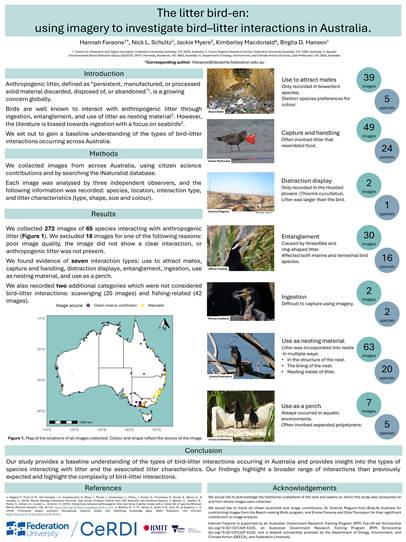
A short video of Hannah’s research project can be viewed here.
CeRDI research shines as Rebecca Farnell takes out Federation University's 3MT
 |
|
|
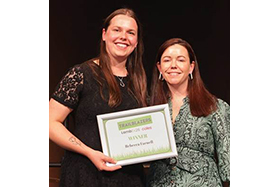
Rebecca, left, accepts her Trailblazer award |
|
Three-Minute Thesis (3MT®) is an internationally recognised research communication competition that challenges higher degree research candidates to present their research and its significance in just three minutes, using only a single static slide. Developed by The University of Queensland, the program helps Masters and PhD researchers develop their communication skills for complex ideas to a non-specialist audience. The competition celebrates research excellence while building valuable skills in public speaking, knowledge translation, and community engagement.
CeRDI congratulates PhD student, Rebecca Farnell, who was successful in winning the Federation University heat of the 3MT and will represent the University at the inter-university competition. Rebecca's winning presentation can be viewed here .
-
Continue reading...
Rebecca’s work is supported by Dr Sarah Preston, CeRDI’s Dr Christiane Bahlo and Professor David Piedrafita. She is a PhD candidate in parasitology focusing on diagnosing and tracking gastrointestinal nematode parasites (such as the Barber's Pole worm) in sheep. Rebecca's success in the 3MT adds to her other recent achievements. In July, Rebecca also won the national LambEx26 Coles Trailblazers
award for her proposal to develop a sheep worm surveillance database, helping producers better manage parasite risk, animal health and productivity.Rebecca’s work was highlighted in a previous CeRDI newsletter.
CeRDI co-op intern recognised as finalist in Victorian International Education Awards
 |
|
|
Mohammad Saud |
|
CeRDI is delighted to congratulate our Co-op intern Mohammad Saud, who has been named a finalist in the Regional category of the Victorian International Education Awards (VIEA) 2026.
The Victorian International Education Awards celebrate the achievements of international students and recognise the valuable contributions they make to their institutions, communities, and Victoria's international education sector. Being selected as a finalist is a significant accomplishment and reflects Mohammad's dedication, professional growth, and positive impact during his time at Federation University Australia.
The winners will be announced at the Victorian International Education Awards ceremony later in September, and we wish Mohammad every success.
Building connections across CeRDI
 |
|
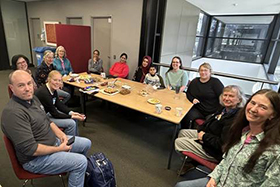
In an era where remote and hybrid work arrangements are increasingly common, CeRDI’s Associate Professor Birgita Hansen recently organised an in-person gathering for CeRDI researchers and Higher Degree by Research (HDR) students.
The event provided an opportunity for researchers to share updates on their current and recent research projects, and for HDR students to discuss their research and progress through their studies. The session fostered valuable conversations about research activities across the Centre and encouraged the exchange of ideas and experiences.
Following the formal presentations, attendees enjoyed a shared meal and continued discussions in a more informal setting. Participants welcomed the opportunity to connect face-to-face, strengthen professional relationships, and learn more about each other's work.
Those who attended expressed their appreciation to Birgita for her initiative in bringing researchers and HDR students together and for her efforts to foster collaboration and strengthen connections across the CeRDI community.
CeRDI welcomes Dr Eithne Cahill to advance Australia’s dataspaces ecosystem
 |
|
|
Program Manager (Dataspaces |
|
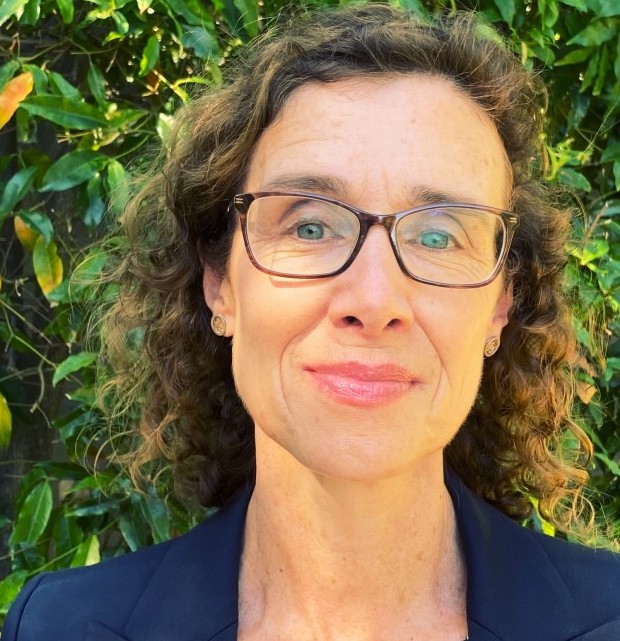
CeRDI welcomes Dr Eithne Cahill as a new member of the team. An experienced program manager, Eithne recently joined CeRDI as part of Federation’s partnership with the Australian Research Data Commons (ARDC). She is the Program Manager for the ARDC’s Australian Dataspaces Program and brings expertise in program leadership, stakeholder engagement, collaboration and research translation, with experience spanning corporate, research and development corporation, not for profit and consulting environments.
With a PhD in Nutrition, her diverse career spans food, agriculture, health and climate sectors.
Most recently she led the Natural Capital Investment Initiative at Climateworks Centre, Monash University, a multi-year program to drive consistency and comparability of nature metrics across diverse stakeholders in research, agriculture, finance, technology and government. A key output of that work was the Natural Capital Measurement Catalogue, developed in collaboration with technical experts at CeRDI, including Professor Francisco Ascui. This world-first catalogue, is an open digital resource which has made an important contribution to the evolving nature data ecosystem in Australia.
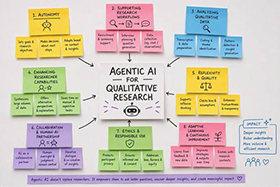
Co-Designing the future of qualitative research with agentic AI
 |
|
Qualitative research plays a vital role across the humanities, arts and social sciences (HASS), helping researchers understand lived experiences, behaviours, cultures and complex social issues. However, analysing qualitative data remains one of the most time-intensive stages of the research process. Researchers often spend many hours transcribing interviews, coding text, identifying themes, comparing findings and synthesising insights. As datasets grow larger and more complex, these manual workflows can become difficult to manage, scale and reproduce.
To address these challenges, the Australian Research Data Commons (ARDC) recently hosted the Community Data Lab Co-Design Workshop: Agentic AI for HASS, bringing together researchers and stakeholders to shape the development of new AI-enabled research infrastructure for qualitative thematic analysis. The workshop was facilitated by CeRDI’s Jennifer Corbett in her seconded role as ARDC Project Manager and attended by CeRDI Research Associate Dr Carolyn Staines.
-
Continue reading...
Tackling Persistent Challenges in Qualitative Analysis
The workshop focused on a proposed Agentic AI for HASS: Qualitative Thematic Analysis capability. According to ARDC, existing qualitative data analysis workflows are often labour-intensive, fragmented and difficult to scale, particularly when working with large datasets. Researchers frequently rely on tools that require substantial training and offer limited support for secure collaboration, reproducibility and responsible use of artificial intelligence.
The proposed platform will address these challenges by developing a researcher-centred environment that supports qualitative thematic analysis while maintaining methodological rigour, human oversight and strong data governance practices. Rather than replacing researchers, the platform is designed to augment researcher expertise by helping streamline elements of the analytical workflow.
Making AI More Accessible to Researchers
The Agentic AI project represents an important step towards making advanced AI capabilities more accessible to researchers who may not have specialist technical expertise. By embedding AI functionality within a purpose-built research environment, ARDC aims to provide tools that can support collaborative, ethical and scalable qualitative analysis. The project has the potential to reduce barriers to AI adoption while ensuring that research quality, transparency and governance remain central to the analytical process.
For researchers facing growing volumes of qualitative data, such infrastructure could significantly improve productivity and enable more time to be spent on interpretation, knowledge generation and research impact rather than repetitive manual tasks.
Co-Design in Action
The workshop itself was an example of ARDC's commitment to consultation and co-design. Participants were invited to contribute use cases, discuss workflow requirements, identify challenges and help shape how the proposed capability will be developed and delivered. The workshop's goal was not simply to present a completed solution, but to gather community input that can inform future development and ensure the resulting platform reflects the needs of researchers working with qualitative data.
As part of the co-design approach, ARDC has published a report of the workshop
and draft project plan on their website for public comment . As AI continues to transform research practices, initiatives such as the ARDC Community Data Lab demonstrate the value of bringing researchers into the design process. By combining community expertise with emerging technologies, ARDC is helping build research infrastructure that is both innovative and grounded in the real-world needs of Australia's research community.
Research publications
 |
|
Khaqan, K., B. Fest, T. Harrison, & H. Sandhu. (2026). “Carbon Accounting at the Farm Level: Scenarios to Achieving Net-Zero Status.” J Sustain Agric Environ5: e70180. doi.org/10.1002/sae2.70180
As agriculture works towards reducing greenhouse gas emissions and reaching net-zero targets, farmers need practical ways to measure and manage emissions on their farms. This study looked at greenhouse gas emissions, production, and profitability on eight mixed farming properties in Western Victoria, Australia. Researchers used two commonly available carbon accounting tools to measure emissions and explored different ways farms could reduce their carbon footprint.
The two carbon calculators produced very similar results, estimating average emissions of about 0.27 to 0.28 tonnes of carbon dioxide equivalent per sheep. Farm profits ranged from AUD 146 to AUD 185 per sheep and AUD 819 to AUD 1,250 per head of cattle.
Enteric fermentation, particularly methane produced by sheep and cattle, was the largest source of on-farm emissions, accounting for 38% to 84% of direct emissions. Manure contributed a smaller share (2% to 5%). Emissions linked to the manufacture and use of synthetic fertilisers were the largest indirect source, contributing up to 53% of total emissions. In comparison, energy use such as fuel and electricity contributed very little (0% to 1%).
-
Continue reading...
The study evaluated two strategies to help farms become carbon neutral: planting trees across the farm and reducing sheep numbers. While both approaches could reduce emissions enough to achieve carbon neutrality, they also reduced farm profitability by between 20% and 99%, depending on the type of farm and how it operated.
To make up for these financial losses, carbon prices would need to increase to around AUD 250 to AUD 320 per tonne of carbon dioxide equivalent. The findings highlight the importance of considering both environmental and economic impacts when developing pathways to net-zero farming, so that emissions reductions are achievable and financially sustainable for farmers.
Ollerenshaw, A., Robinson, N., & Chadha, A. (2026). Trusted Information Sources and Preferred Delivery Methods for Soil Indicator Information Among Farmers, Advisors, and Researchers. Sustainability, 18(15), 7731. doi.org/10.3390/su18157731
Farmers have access to a large amount of information about soil health and soil management through industry programs, advisors, researchers, and educational activities. However, little is known about their preferences for receiving this information and which sources they trust most.
This study surveyed 265 people involved in Australian agriculture, including farmers, agricultural advisors, and researchers, from cattle, grain, and sheep industries. The survey examined where participants currently obtain information about soil health indicators and how they would prefer to receive it.
The results showed that farmers use a variety of information sources but place the greatest value on information delivered by trusted people and organisations. Preferred sources included industry advisors, agronomists, consultants, researchers, and farmer or producer groups. Farmers also favoured practical, face-to-face learning opportunities such as field days, farm walks, tours, and training programs.
The findings highlight that making information available is simply not enough. Farmers are more likely to use soil health information when it is delivered by trusted individuals, tailored to their needs, and shared through existing industry networks and relationships. Personal connections and opportunities for discussion are particularly important.
In contrast, advisors and researchers showed no strong preference for any particular source of information. While online information and digital resources for information delivery to farmers is commonly used, this study found that farmers did not strongly favour these methods compared with more personal forms of communication.
Overall, this research highlights the important role that industry advisors, researchers, and other trusted intermediaries play in helping farmers understand and apply soil health information. It is therefore recommended that future investments focus on supporting these groups to communicate soil health information effectively, ensuring that farmers can easily access, understand, and use the information to improve farming practices.
Warnakulasuriya, R., Shahzad, B., Adnan, M., Chadha, A., Farooq, M., & Bajwa, A. (2026). Morphological and physiological adaptations underpin drought resilience in contrasting populations of annual ryegrass (Lolium rigidum). Scientific Reports 16, 23562 doi.org/10.1038/s41598-026-61108-2
Annual ryegrass is one of the most troublesome weeds affecting grain farming in Australia. This study examined how two different annual ryegrass populations responded to different levels of soil moisture, from very wet conditions to severe drought.
The results showed that annual ryegrass can adapt well to a wide range of moisture conditions. Surprisingly, plants often grew better under moderate water limitation than in fully saturated soil. Under these conditions, the herbicide-resistant population produced many more leaves and tillers (side shoots), helping it become larger and more competitive.
However, severe drought had a major impact on plant growth. Plants became shorter and produced much less above-ground and root biomass. Root growth increased slightly under moderate water stress, helping plants access water, but declined when drought became severe.
The herbicide-resistant population appeared better able to cope with changing moisture conditions. It adjusted its development more readily, flowering up to 35% earlier under water stress and maintaining slightly higher leaf water content than the susceptible population. These characteristics may help it survive and reproduce under challenging conditions.
Reproduction was also influenced by moisture availability. Moderate water limitation produced the highest numbers of seed heads and longer flower spikes, while severe drought reduced seed production by 30% to 50%. Although the susceptible population produced more seeds when growing conditions were favourable, the resistant population maintained more consistent seed production under stressful conditions.
Overall, the study shows that annual ryegrass is highly adaptable and can continue to grow and reproduce across a broad range of moisture conditions. This ability to adjust to environmental stress may help explain its success as a weed in Australian cropping systems and highlights the need for tailored weed management strategies that account for differences between populations.
Ollerenshaw, A., Thompson, H., & Staines, C. (2026). Small-scale and artisanal agribusinesses in the Central Highlands region of Victoria, Australia: challenges, shared learning, and pathways to growth. Small Enterprise Research, 1–16. doi.org/10.1080/13215906.2026.2719988
Small-scale and artisanal agribusinesses play an important role in the economy and identity of regional communities. A recent study of producers in Victoria's Central Highlands explored the opportunities and challenges facing these businesses through surveys and interviews with local stakeholders.
The findings highlighted the strong connection between business success and regional conditions, with many producers experiencing financial pressure from external events beyond their control. Despite these challenges, participants remained optimistic about the future of their enterprises and expressed interest in growth opportunities, particularly in agritourism.
The study also emphasised the value of peer networks, mentoring, and extension services in helping businesses access tailored advice and build collaborative relationships. Participants identified the need for greater sector-wide promotion to raise awareness of local producers and attract new customers. The findings suggest that coordinated advocacy and supportive policy settings are needed to recognise and strengthen the significant contribution these enterprises make to regional economies and communities.
About CeRDI
The Centre for eResearch and Digital Innovation (CeRDI) is a research centre at Federation University Australia focused on:
- the application of information and communications technology (ICT) and the development of innovative, world class knowledge management systems;
- significantly advancing the digital literacy and knowledge management capabilities of partner organisations;
- fostering partnerships for the development and implementation of eResearch with industry, government and academia; and
- measuring the impact of eResearch and digital innovation through longitudinal research.
Contact CeRDI
For further details about CeRDI’s diverse portfolio of research please visit our website: www.cerdi.edu.au, or contact Director, Associate Professor Helen Thompson: h.thompson@federation.edu.au
Mailing Address
Centre for eResearch and Digital Innovation
Federation University Australia
PO Box 691
Ballarat Vic 3353
Office Location
Suite 15, Greenhill Enterprise Centre
Ballarat Technology Park
University Drive
Mount Helen Vic 3350
Phone: +61 3 5327 9314
Email: support@cerdi.edu.au
Subscribe to the CeRDI Newsletter Mailing List
I would like to subscribe to the CeRDI Newsletter Mailing List to receive notifications of future CeRDI Newsletters.
If you have any feedback, please email newsletter@cerdi.edu.au