



CeRDI Newsletter Summer 2026
In this issue:
- Message from the Director
- Showcasing Online Farm Trials at GRDC Research Updates
- Turning data into trust: building Australia’s soil knowledge future
- David Ebbs Memorial Scholarship
- Central Highlands Resilient Agriculture project
- Turning community data into environmental intelligence for Victoria’s waterways
- CeRDI researchers raising the bar for agricultural data
- Mapping the science of carbon farming
- Cultivating Digital Research Excellence: 2026 HASS & Indigenous RDC Summer School
- Visualising Australasia’s Soils (VAS): February 2026 update
- Engagement day delivers collaborative insights
- News snippets
- HDR news
- About CeRDI
- Contact CeRDI
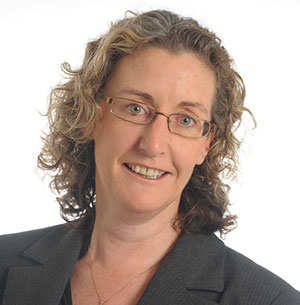
Message from the Director
 |
|
|
Distinguished Professor |
|
Welcome to this issue of the CeRDI newsletter, highlighting recent collaborations, research activity and digital innovation across our projects.
Over summer, the CeRDI‑Online Farm Trials team were active participants at the 2026 GRDC Research Updates in Adelaide, Perth, Wagga Wagga and Bendigo. These events provided valuable opportunities for CeRDI’s Assoc Prof Nathan Robinson and Dr Aakansha Chadha to connect with growers, researchers and GRDC staff, promote Online Farm Trials and invite contributors to participate in upcoming research interviews supporting future platform improvements.
Data innovation was also in focus as Dr Alison Ollerenshaw presented at Federation University’s Open Access Week, using the Visualising Australasia’s Soils (VAS) program to demonstrate how trusted, well‑governed data systems create value for research, industry and communities. Insights from VAS partners continues to be collected, guide development of Australia’s emerging soils knowledge system.
This edition also marks a special moment for our community as we honour the legacy of Dr David Ebbs through the establishment of a new memorial scholarship at Federation University. David was a cherished colleague, mentor and friend whose generosity, integrity and commitment to supporting others left a lasting impact across CeRDI and the wider University.
Progress continues on the Central Highlands Resilient Agriculture project which is a collaboration with Commerce Ballarat, Agriculture Victoria and regional partners from local government. A forthcoming report will highlight opportunities for climate resilience, diversification and long‑term protection of the region’s agricultural assets.
In the environmental space, CeRDI have delivered further enhancements to Victoria’s WaterWatch and EstuaryWatch portals, transforming decades of community‑collected waterway data into accessible, credible and decision‑ready information for volunteers and land managers.
Showcasing Online Farm Trials at GRDC Research Updates
 |
|
|
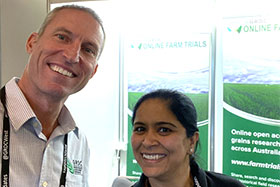
GRDC’s Peter Bird and Dr Aakansha |
|
As part of ongoing efforts to expand the reach of Online Farm Trials (OFT) and engage new contributors, the CeRDI-OFT team had a strong presence at this year’s GRDC Research Updates. Associate Professor Nathan Robinson and Dr Aakansha Chadha hosted trade displays at events over February and March in Adelaide, Perth, Wagga Wagga and Bendigo. At the events, they connected with trial researchers, growers, and a wide range of industry stakeholders.
The OFT displays at these events were aimed at increasing awareness of the platform, encourage collaboration with both existing and prospective contributors, and highlight the value of uploading additional trial projects, particularly where gaps exist. A key highlight was the opportunity to meet emerging researchers, including higher degree by research students and early‑career professionals from public and private research organisations, many of whom already use OFT as a “tool of trade” to support their work.
Turning data into trust: building Australia’s soil knowledge future
 |
|
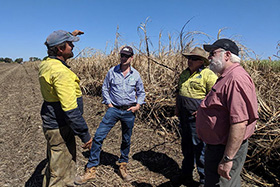
In January, CeRDI Senior Research Fellow Dr Alison Ollerenshaw delivered a university wide presentation to Federation’s Library Open Access Week program. The theme of the program focused on leveraging data to create positive societal impacts by empowering communities, fostering collaboration, and supporting research.
Alison’s presentation discussed the challenges associated with data management and use, providing a real-world demonstration though CeRDI’s experience of their soils data program, Visualising Australasia’s Soils (VAS).
Data is expanding rapidly and reshaping the way we understand and interact with the world. When disparate datasets are brought together and visualised, they open new pathways to insights that were previously hidden or unrecognised. For researchers, this means discovering patterns in the data and answering a broader range of research questions. For industry, data is transforming processes, production systems, and organisational profiles—creating positive impacts for individuals, businesses, and communities.
David Ebbs Memorial Scholarship
 |
|
|
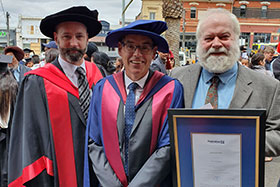
Professor Andrew Barton, Dr David Ebbs |
|
Federation University has established a new memorial scholarship in honour of the late Dr David Ebbs, recognising his lifelong commitment to education, community service, and creating opportunities for regional students.
David, a respected colleague and valued member of the University community, is remembered for his generosity, integrity, and unwavering dedication to helping others succeed. The scholarship named in his honour reflects these qualities, providing financial support to students who demonstrate community spirit, leadership potential, and a commitment to making a positive difference—attributes David modelled throughout his life and career.
David completed his PhD with CeRDI in 2019 and was a mentor and friend to many across the Centre. He was deeply supportive of staff and students, always willing to share his time, knowledge, and encouragement. His strength of character, intelligence and enthusiasm remain defining memories of his contribution to CeRDI and the broader University.
-
Continue reading...
The memorial scholarship offers a meaningful support to students who may otherwise face barriers to continuing their studies. It stands as a lasting tribute to David’s belief in the transformative power of education and his dedication to helping young people thrive.
Through this scholarship, David’s legacy will continue to inspire and support future generations, ensuring his impact endures within the Federation University community and beyond.
For further information about the scholarship: David Ebbs Memorial Scholarship | Federation University

Central Highlands Resilient Agriculture project
 |
|
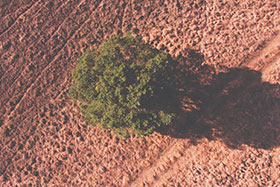
Federation University, in partnership with Commerce Ballarat, is finalising the report on the first major initiative supporting the Central Highlands Drought Resilience Plan (CHDRP). The Resilient Agriculture project provides a comprehensive look at how the region’s agriculture sector can adapt to a changing climate, respond to increasing drought pressures, and explore new opportunities for diversification and value‑adding.
Commencing in June 2025, the project involved an extensive desktop review and consultations with local farmers and agribusiness representatives across the Central Highlands. A project steering group was established to support the direction of the work. Members included Commerce Ballarat, Agriculture Victoria, Federation University and each of the six LGAs in the Central Highlands. A research reference group comprising Federation University researchers with regional expertise and domain knowledge was also established. These governance structures have ensured the project remains locally grounded, evidence-informed, and aligned with strategic priorities for agricultural resilience in the region.
Turning community data into environmental intelligence for Victoria’s waterways
 |
|
|
Image: Alizada Studios — stock.adobe.com |
|
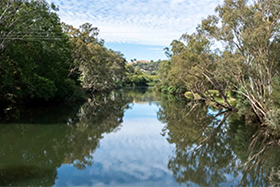
As Australia’s waterways face ever-increasing threats from rapid development, climate change and water extraction, community-led monitoring programs like WaterWatch and EstuaryWatch Victoria are stepping up as guardians of the state’s rivers and estuaries.
Long Standing Citizen Science Legacy
Launched in Victoria in 1993, WaterWatch Victoria became a key part of the national WaterWatch initiative. Piloted in regional catchments like the Wimmera and Corangamite, the program aimed to tackle pressing waterway health issues, drawing in schools, community organisations and local residents to help monitor water quality and safeguard the state's rivers, wetlands and estuaries.
-
Continue reading...
The programs engage communities and provide valuable data to promote the sustainable management of waterways, mobilising volunteers to monitor river health across the state. More than 400 volunteers head out monthly across the state to collect water quality data.
Strengthening Impact Through Digital Innovation
Researchers and technical experts from Federation’s Centre for eResearch and Digital Innovation (CeRDI) have been working with the programs since 2016, bringing the Centre’s expertise in applying advanced information and communications technology and spatial technologies to solve real-world problems.
CeRDI Senior Programmer Paul Feely says water quality data has been collected over many years, but earlier information was often presented in cumbersome, non-user-friendly spreadsheets, limiting its accessibility and broader use.Modern Platforms for Clearer Insight
To address this, CeRDI recently launched an updated WaterWatch and EstuaryWatch portal
to strengthen Victoria’s two major citizen science programs. The updates focus on improved presentation, analytical tools and visualisations, making it easier to explore and understand water quality issues at a glance while still providing access to full datasets for more detailed analysis.This approach supports decision-making across a wide range of users, from volunteers and students using the portal as part of learning activities, to catchment management authorities, local and state governments, universities and private organisations using the data for planning, reporting and research.
End to End Approach to Citizen Science
Beyond supporting individual programs, Federation University, through CeRDI, has played a central role in scaling citizen science across Australia by delivering specialist digital platforms that underpin the full lifecycle of community-led monitoring.
CeRDI’s work goes beyond simply storing information. The WaterWatch and EstuaryWatch platforms are designed to support the collection of high-quality standardised data in the field, ensure its integrity through validation and management processes and transform it into accessible analysis and visualisations. This end-to-end approach helps bridge a longstanding gap between community data collection and its effective use in reporting, decision-making and on-ground environmental improvement.
Turning Data into Trusted Environmental Intelligence
By providing intuitive dashboards, long-term trend analysis and spatial visualisation tools, the platforms enable volunteers, educators and land managers to see how waterways are changing over time, identifying emerging issues and communicating environmental conditions in clear, evidence-based ways. This access to complete datasets and robust analytical tools gives confidence to catchment management authorities, councils, researchers and government agencies that citizen-generated data can be trusted and used alongside professional monitoring.
This platform-led approach has enabled programs like WaterWatch and EstuaryWatch to grow in scale and impact, supporting consistent data collection across regions and decades while maintaining strong community ownership and engagement. Together, technical rigour and accessibility are helping citizen science evolve from local monitoring initiatives into integrated sources of environmental intelligence that inform practical actions to protect and restore Victoria’s rivers and estuaries.
These sites make it easy for anyone to see a 20-year history of a waterway’s condition, or if there have been any spike events which may have seen fish deaths, or if big industrial incidents had an impact on these systems,”
Mr Feely said.Filling a Growing Monitoring Gap
CeRDI Principal Research Fellow Assoc Prof Birgita Hansen says WaterWatch is one of the longer-running programs nationally where environmental monitoring is undertaken by citizen scientists.
Water quality monitoring has traditionally been led by governments or professional organisations, and it is costly to maintain. As resources have declined over time, levels of professional monitoring have dropped, leaving an increasingly significant gap in reliable data,”
Assoc Prof Hansen said.
Citizen scientists who are contributing to programs like WaterWatch and EstuaryWatch are filling that important role.”
Building Expertise Through Participation
CeRDI has a long history of leading and supporting citizen science initiatives, including Moth Tracker
– an online platform that enables members of the public to upload sightings of the endangered Bogong Moth during its seasonal migration – as well as projects tracking the migratory shorebird Latham’s snipe and assessing the value of the urban wetlands the bird relies on.Assoc Prof Hansen says one of the perennial challenges with citizen monitoring is data credibility, with some decision-makers questioning whether volunteer-collected data can be relied upon. She says participants are trained and effectively become “expert volunteers” who understand the science and the methods, developing deep knowledge of their local waterways over time.
The citizen scientists are taking samples and looking at classic water quality indicators that tell you something about river health, like the levels of salt, the amount of oxygen, pH levels and turbidity - the cloudiness caused by particles, organic matter, and waste,”
she said.Monitoring Change in Dynamic Waterways
Such monitoring is crucial because waterways can change rapidly.
Assoc Prof Hansen says a big flood event may result in a river running brown for a few days because of runoff from housing developments upstream, which carries sediments and contaminants like pesticides from people's gardens, as well as other pollutants from properties.
This occurs on a much larger scale in large agricultural catchments, where farm pesticides and herbicides can cause significant downstream impacts, like algal blooms.
The WaterWatch and EstuaryWatch programs are about building the skills and the capability in community members, particularly local community members who have a passion and interest in their waterway or their estuary, to be able to use established scientific methods to monitor that water quality,”
Assoc Prof Hansen said.Community Commitment at the Core
Both programs rely heavily on community and volunteer contributions to support regional data collection and water-quality monitoring across Victoria's rivers and associated waterways. EstuaryWatch promotes the monitoring of estuary health across 22 active Victorian estuaries and is supported by the involvement of local catchment management authorities.
CeRDI researchers raising the bar for agricultural data
 |
|
The future of farming isn’t just happening in paddocks—it’s unfolding in servers, sensors, and sophisticated digital tools. At Federation University, three researchers are helping agriculture make that leap with confidence.
Dr Aakansha Chadha, Assoc Prof Nathan Robinson, and Jude Channon are strengthening the quality and reliability of farm data, so the technologies shaping the future of agriculture can truly depend on it.
Why Data Quality Matters More Than Ever
As farms adopt artificial intelligence, precision tools, automation, and satellite‑powered insights, data has become the lifeblood of modern agriculture. But the high‑tech tools are only as good as the information fed into them. Poor‑quality data can lead to poor decisions—and in agriculture, that can mean wasted resources, reduced yields, or missed opportunities for sustainability.
-
Continue reading...
A Framework Built for Real‑World Farming
To tackle this challenge, the team has developed a practical, easy‑to‑use data quality framework designed specifically for agricultural trials. They have developed two tools:
- A trial data quality test for people submitting or contributing trial data
- A trial data quality statement for those wanting to use that data to make informed decisions
Together, these give a clear picture of whether a dataset is reliable, robust, and ready to support research or guide action on the ground.
Putting It to the Test
A case study using the Online Farm Trials platform (https://www.farmtrials.com.au/
) shows how the framework can reveal strengths, weaknesses, and hidden insights in trial datasets, helping farmers, advisers, and researchers quickly judge whether a dataset is fit for purpose.Why This Matters for the Future of Farming
Digital agriculture is essential in a changing environment. As climate pressures grow and global demand intensifies, farmers need tools that deliver clarity. Chadha, Robinson, and Channon’s framework provides exactly that: a standardised, transparent, and flexible way to assess data quality across diverse agricultural contexts.
A more detailed report of their work can be found at:
Chadha, A., Robinson, N., & Channon, J. (2026). Towards Data-Driven Decisions in Agriculture—A Proposed Data Quality Framework for Grains Trials Research. Data, 11(1), 19. https://doi.org/10.3390/data11010019
Mapping the science of carbon farming
 |
|
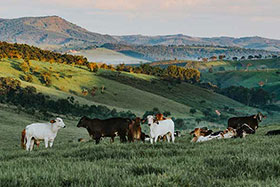
Carbon farming is getting a lot of attention these days, and for good reason: it offers farmers practical ways to improve soil health, boost long term productivity, and help tackle climate change at the same time. To understand how this area is developing CeRDI Research Fellow Dr Ben Fest supervised PhD candidate Kashif Khaqan to conduct a review of almost 20 years of research on carbon farming and agriculture. The project was delivered through the co-op HDR program with input from the supervisory team of Prof Harpinder Sandhu, Ararat Jobs and Technology Precinct, and Dr Tim Harrison, CEO, Rural City of Ararat.
Since the introduction of Australia’s Carbon Farming Initiative in 2011—followed by the Emissions Reduction Fund in 2014—research activity has grown rapidly, and new science continues to shape how farmers can benefit from carbon projects.
-
Continue reading...
The analysis showed six major themes in carbon farming research, many of which connect directly to day-to-day farm management. These include improving soil structure, increasing organic matter, adopting regenerative practices, and making farm businesses more resilient in the long term.
The study provided a clear picture of where the science is heading. For farmers, it highlighted practical methods that can lift soil carbon while supporting productive, profitable operations. For policymakers, it showed how different countries are working together—and where more support may be needed to help farmers adopt practices that reduce emissions and build more sustainable farming systems.
For anyone working in agriculture—whether on the land, advising producers, or shaping policy—the review offered a useful guide to the opportunities carbon farming presents. It also brings together research that can help new and existing landholders understand how carbon focused practices might fit into their business and the wider landscape. As interest continues to grow, carbon farming is proving to be more than just a climate solution—it’s becoming a pathway to more sustainable and resilient agriculture.
A more detailed report of the review can be found at:
Khaqan, K., Fest, B., Harrison, T., & Sandhu, H. (2026). Prospects of Carbon Farming in Australian Broadacre Agriculture: Transition Towards Net Zero. Journal of Sustainable Agriculture and Environment, 5(1), e70110. https://doi.org/10.1002/sae2.70110
Cultivating Digital Research Excellence: 2026 HASS & Indigenous RDC Summer School
 |
|
Highlights from Ballarat’s two-day intensive
Hosted by Federation University Australia at its SMB Campus in Ballarat, the fourth annual Humanities and Social Science (HASS) and Indigenous Research Data Commons (RDC) Summer School welcomed 55 researchers on 3–4 February 2026. The event was delivered with support from CeRDI team members on secondment to the Australian Research Data Commons (ARDC), Jennifer Corbett and Jude Channon, who helped create a collaborative and technically rich learning environment.
Designed to build ethical digital research capability, the Summer School focused on practical engagement with Australia’s national research infrastructure—particularly for early career researchers and PhD candidates preparing for data‑intensive projects. A strong emphasis on Indigenous data governance ensured that technical training remained grounded in cultural and ethical contexts, fostering respectful and responsible research practice.
-
Continue reading...
Building confidence through practice
The impact was substantial. Prior to the event, only 3% of participants reported high confidence in data‑enriched research using ARDC infrastructure. By the end of the two‑day program, that figure had risen to 78%.
Participants engaged in four specialist workshop streams:
- Working with Indigenous Data, applying CARE principles (emphasizing Collective benefit, Authority to control, Responsibility and Ethics) and using the Indigenous Data Network Catalogue
- Sustainable Data for HASS and Indigenous Studies, exploring FAIR and CARE-aligned practices with RO‑Crate
- Social Media Data Collection and Analysis, using ethical tools to study large‑scale platform data
- Administrative Data Analysis with R, introducing R and RStudio for complex government datasets
From tools to real‑world impact
Plenary sessions highlighted how these tools are already transforming research, with speakers sharing insights into Indigenous data contexts, creative arts research, and AI‑enabled archival workflows.
Community at the centre
Beyond technical skills, the Summer School prioritised connection and reflection. Participant‑led sessions encouraged collaboration, while the Yarning Circle provided a powerful space to reflect on ethics, identity, and relationships when working with First Nations communities.
Participants anticipate sharing their new skills with an estimated 250–500 colleagues nationwide, extending the impact of the Ballarat‑hosted Summer School well beyond the campus.
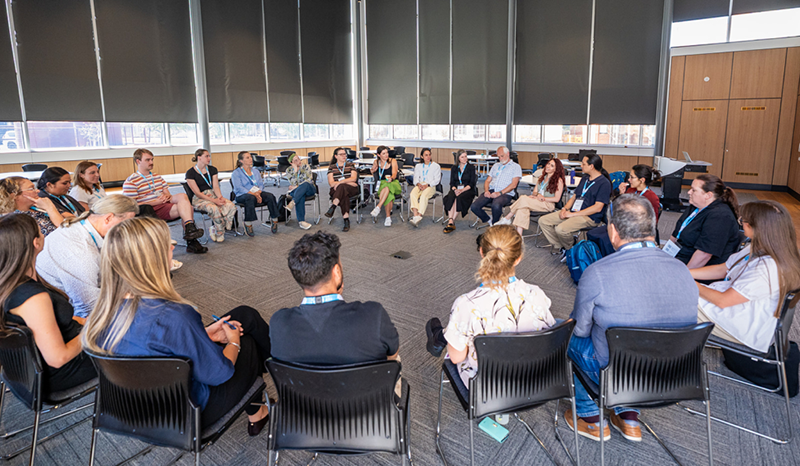
The Yarning Circle. Image: Michelle McFarlane / ARDC
Visualising Australasia’s Soils: February 2026 update
 |
|
Visualising Australasia’s Soils (VAS) continues to mature as a nationally significant, interoperable soil data system, with 2026 marking a key milestone year for the project. Planning for VAS beyond the Soil CRC funding period is now well underway, reinforcing its long-term vision as an enduring platform for soil data discovery, access and reuse across Australasia.
A refreshed platform supporting research and industry
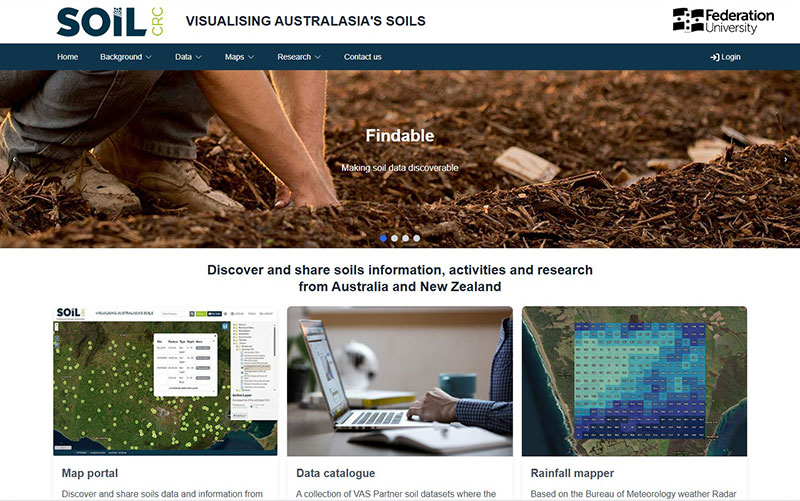
The VAS online system has recently undergone a major redesign, introducing new tools, clearer information pathways, and improved usability. These enhancements aim to better support researchers, data custodians, industry partners and end users, making it easier to discover datasets, explore soil information, and understand the technical foundations that underpin VAS.
-
Continue reading...
A new public section of the website now documents the technical architecture and research foundations of VAS, including system design, environmental monitoring integrations, governance frameworks, and global data connections. This resource provides transparency around how VAS enables secure, FAIR aligned soil data sharing and interoperability.
Strengthening data governance and visibility
Important progress has been made in improving the visibility of soil data holdings within VAS. A new (meta)data catalogue capability now allows aggregated descriptions of datasets to be viewed, even where underlying data remain restricted. This provides valuable insight into the scale, coverage and custodianship of soil data held within the system, while respecting licensing and access controls.
Data governance remains a core focus, with a socio technical governance framework under development. This work draws on national best practice and CeRDI’s experience in data stewardship, supporting trust, longevity, and appropriate re use of soil data beyond individual projects or organisational lifecycles.
Enhanced public datasets and mapping capabilities
The VAS map portal has been substantially updated, delivering improved access to national and state level soil information. Users can now directly explore Soil and Landscape Grid of Australia (SLGA) layers and generate pixel based reports of modelled soil properties, enabling more nuanced spatial analysis and comparison.
The continued enhancement of public datasets—including better documentation and explanatory links—adds considerable research and decision support value, particularly when combined with user contributed data.
Research outputs and impact
Research remains central to the VAS project, with outputs documenting both technical innovation and the social dimensions of building an interoperable soil data federation. To date, VAS has generated multiple peer reviewed journal articles, conference presentations, and technical reports, contributing important insights into data interoperability, governance, and long-term stewardship of environmental data.
Impact research activities will recommence later in 2026, completing the impact assessment cycle for Phase 3 and further informing future development pathways.
Building community and capacity
VAS continues to grow its Community of Practice, with project partners encouraged to contribute case studies showcasing how they are using VAS in research, extension and applied decision making. Funding support is available to assist partners in developing these stories, which play a critical role in demonstrating real world impact and encouraging wider adoption.
Capacity building initiatives are also underway, including the development of self paced education modules to strengthen data literacy around metadata, licensing, ownership, and FAIR principles.
Looking ahead
Planned activities for 2026 include further improvements to self service data management, expanded educational resources, ongoing enhancement of public datasets, and renewed impact research. Together, these initiatives support VAS’s transition from a CRC funded project to a sustainable, nationally valuable soil data infrastructure.
Engagement day delivers collaborative insights
|
|
During November 2025, Federation University and CeRDI staff attended a collaborative session with representatives from the Australian Access Federation (AAF), and the Australian Research Data Commons (ARDC). The day provided a valuable opportunity for teams to share updates, explore emerging priorities, and discuss how national initiatives align with the University’s research and digital infrastructure needs.
The AAF team provided an update on their latest activities and developments in identity and access management across the higher‑education sector. Their presentation sparked a productive discussion with Federation University colleagues, focusing on current challenges and future priorities in the University’s identity and access management landscape.
-
Continue reading...
CeRDI’s Program Delivery Manager Richard Archer and Senior Systems Analyst Programmer Paul Feely followed with an overview of several key projects currently underway within the centre. Their session highlighted the breadth of CeRDI’s work—from digital innovation to applied research—and showcased how these initiatives continue to support regional, national, and sector-wide collaborations.
The session also included a presentation from the CeRDI-ARDC team, who shared insights into the projects they are leading across Australia’s research data ecosystem. Areas of focus for the presentations included the National Information Infrastructure, nation-scale data infrastructure for research in health, humanities and social science, and indigenous research data communities.
The event offered an important forum for shared learning, reflection, and forward planning—reinforcing the strong partnerships that continue to support the University’s research and digital infrastructure capabilities.
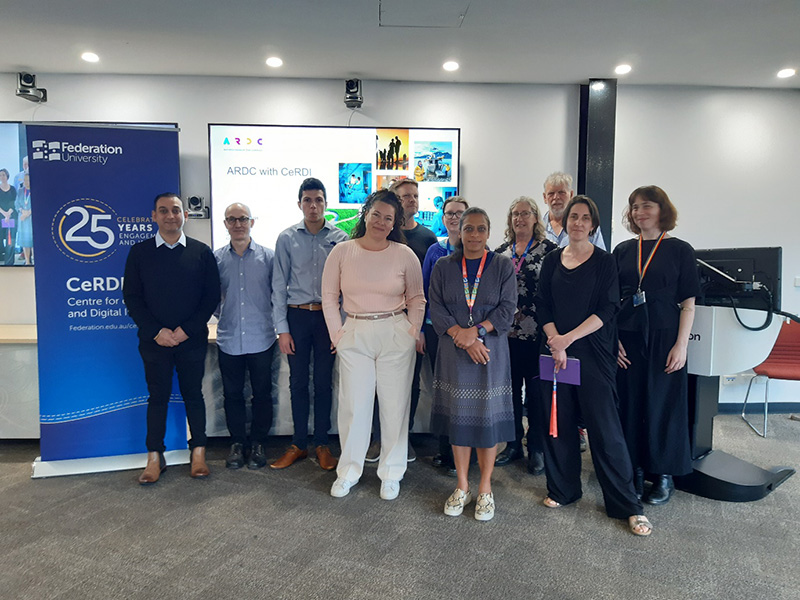
Australian Access Federation (AAF) visit the CeRDI ARDC team in November 2025 Image: Kelly Hartwig/CeRDI
News snippets
 |
|
|
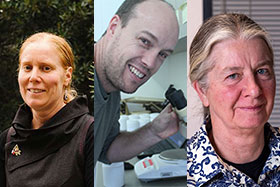
Birgita Hansen, Nathan Robinson, and |
|
Staff updates: Three CeRDI researchers were recently promoted in their academic roles. Birgita Hansen and Nathan Robinson have each been promoted to Associate Professor, Dr Chris Bahlo was promoted to Research Fellow – Data Interoperability. Congratulations to Birgita, Nathan and Chris.
We bid farewell to web developer and programmer Rahul Sinha in December 2025 and wish him all the best as he pursues new opportunities.
Dr Alison Ollerenshaw was recognised for 20-years of service at Federation University.
-
Continue reading...
Publications
Chadha, A., Robinson, N., Ollerenshaw, A., & Larkins, J. (2026). Assessing Soil Indicator Practices: Determinants and Variations Among Australian Farmers. Soil Use and Management, 42(1). e70196. https://doi.org/10.1111/sum.70196
Maron, M., Indraswari, K., Fraser, H., Mills-Anderson, J., Melton, C.B., Reside, A.E., Bennett, A., Burbidge, A., Clarke, M., Clarke, R., Davis, R., Freeman, A., Gibson, M., Hansen, B.D., et al. (2026) A typology of Australian terrestrial bird communities. Diversity and Distributions 32(2), e70143. https://onlinelibrary.wiley.com/doi/10.1111/ddi.70143
Khaqan, K., Fest, B., Harrison, T., & Sandhu, H. (2026). Prospects of Carbon Farming in Australian Broadacre Agriculture: Transition Towards Net Zero. Journal of Sustainable Agriculture and Environment, 5(1), e70110. https://doi.org/10.1002/sae2.70110
HDR news
 |
|
|
Rekha Attanayake recently lodged |
|
CeRDI HDRs are making significant strides in their research. Sonia Proctor and Saundra LeClair are working towards their upcoming confirmation of candidature.
Rekha Attanayake recently lodged her PhD thesis for examination. Rekha commenced her PhD with CeRDI in 2019 with Southern Farming Systems, Victorian Limestone Producers Association and Precision Agriculture as industry partners. Rekha’s research: Developing new methods to help farmers make decisions on lime use and lime requirement. For more information, visit Rekha’s research profile.
Rob Clark is close to submitting his thesis for examination and we wish Rob all the best as he progresses towards submission next month. Rob’s research: Predicting crop yield within the growing season at sub-paddock scale: A big data approach.
About CeRDI
The Centre for eResearch and Digital Innovation (CeRDI) is a research centre at Federation University Australia focused on:
- the application of information and communications technology (ICT) and the development of innovative, world class knowledge management systems;
- significantly advancing the digital literacy and knowledge management capabilities of partner organisations;
- fostering partnerships for the development and implementation of eResearch with industry, government and academia; and
- measuring the impact of eResearch and digital innovation through longitudinal research.
Contact CeRDI
For further details about CeRDI’s diverse portfolio of research please visit our website: www.cerdi.edu.au, or contact Director, Associate Professor Helen Thompson: h.thompson@federation.edu.au
Mailing Address
Centre for eResearch and Digital Innovation
Federation University Australia
PO Box 691
Ballarat Vic 3353
Office Location
Suite 15, Greenhill Enterprise Centre
Ballarat Technology Park
University Drive
Mount Helen Vic 3350
Phone: +61 3 5327 9314
Email: support@cerdi.edu.au
Subscribe to the CeRDI Newsletter Mailing List
I would like to subscribe to the CeRDI Newsletter Mailing List to receive notifications of future CeRDI Newsletters.
If you have any feedback, please email newsletter@cerdi.edu.au