



CeRDI Newsletter Autumn 2026
In this issue:
- Message from the Director
- Building a Legacy of Soil Data in Australia
- Soil Health Indicator Workshops Identify National and Regional Priorities
- Sustainability and Natural Capital Reporting Workshop
- From Research to the Paddock: Soil CRC Workshop
- CeRDI Platform Connects Drought Resilience Trials
- Supporting Climate-Ready Future for Central Highlands Agriculture
- Advancing Data Collaboration
- Sharing Knowledge across the Mallee Region
- News Snippets
- Publications
- About CeRDI
- Contact CeRDI
Message from the Director
 |
|
|
Distinguished Professor |
|
The stories in this Autumn 2026 edition of the CeRDI newsletter highlight the breadth of our research across core programs, spanning digital innovation, environmental data, and agricultural systems.
Across the programs, we are seeing strong momentum in translating research into practical tools and outcomes. From advancing national soil data infrastructure through the Visualising Australasia’s Soils (VAS) initiative, to supporting drought resilience trials and streamlining sustainability reporting, CeRDI is playing a central role in building integrated, data-driven approaches to complex agricultural challenges at both local and national levels.
A consistent theme in this edition is collaboration-working alongside growers, industry, government, and research partners to ensure that our work remains grounded and the outcomes meaningful and practice-focused. Whether through workshops identifying locally relevant soil health indicators, extension activities in regional communities, or innovation programs accelerating research adoption, we continue to prioritise impact beyond academia.
We are also strengthening our capabilities in data systems and analytics, welcoming new expertise to the team and advancing approaches to secure, governed data sharing. These efforts are essential to unlocking the full value of environmental and agricultural data, enabling better decision-making and fostering trust across sectors.
I hope you find this edition informative and inspiring, and I thank our many partners and collaborators for their ongoing contributions to CeRDI’s work.
Distinguished Professor Helen Thompson
Director, CeRDI
June 2026
Building a Legacy of Soil Data in Australia
 |
|
The following story about VAS was featured in the Soil CRC April newsletter: Building a legacy of soil data in Australia - Soil CRC 
One of the flagship projects of the Soil CRC has been the Visualising Australasia’s Soils project, led by Federation University and involving more than half of the Soil CRC participant organisations. Running alongside the National Soil Action Plan and the Australian National Soil Information System (ANSIS), it has helped to fill a gap around soil data that exists outside of the CSIRO, state government and RDC archives.
A vast amount of disparate soil data exists in Australia, both in the public and private sectors. But how can we best access and apply this data to support decision making that leads to best practice soil management? Enter the Soil CRC’s Visualising Australasia’s Soils (VAS) project led by Federation University.
-
Continue reading...
Beginning in 2019, the project set out to provide Soil CRC participants with access to data and information for knowledge on Australian and New Zealand soils. Its aim is to make the data Findable, Accessible, Interoperable and Reusable (FAIR), and align with other national and international soil research data initiatives to maximise discovery and reuse.
Phase 1 (2019-2021) of the project delivered a dynamic web-based portal that brings together a large array of public and private soil datasets for use by the Australian agricultural industry.
Phase 2 (2021-2024) added greater functionality to the VAS portal, including a self-serve data management system, improved filtering and reporting, seamless interoperability with the Australian National Soil Information System (ANSIS) and the inclusion of soil sensor data.
Now in its third and final phase, ‘Visualising Australasia’s Soils: Building a legacy’ (2024-2027), the project seeks to transform the VAS portal into an Australian soils knowledge system that is both self-sustaining and inherently useful for research and education.
Project leader A/Prof Peter Dahlhaus from Federation University said Phase 3 is delivering a governance framework, business case and clear pragmatic value propositions for end users. Artificial intelligence is being harnessed to add value to soil performance data, and improve the reporting of soil quality, function and target values for high performance soils.
During this phase, we have rolled out a series of upgrades and improvements to the VAS portal to enrich the user experience,” he said.
We’ve introduced substantial enhancements – new tools, improved features, updated resources, and clearer information - designed to make the portal more intuitive, seamless, and easier to use.
Planning for VAS beyond the Soil CRC is already well underway, to expand its use and ensure the ongoing success of the platform
The VAS project team will continue to build the long term legacy of VAS over the next 12 months and share its value with a broader audience,” A/Prof Dahlhaus said.
Read on to learn about the latest improvements and to find out what comes next.
New and enhanced content
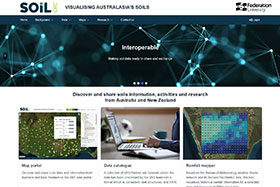
The reconfigured VAS website
has been designed to make navigating and accessing information easier than ever.New content ‘cards’ now guide users directly to key areas of the site, making it simple to locate the most popular and frequently used resources,” A/Prof Dahlhaus said.
A major addition to the site is a section dedicated to the VAS technical build
and supporting research activities, providing a clear overview of the technologies, systems, and global connections that underpin VAS.A/Prof Dahlhaus said research continues to be a critical pillar of the VAS project.
A growing collection of reports, conference papers, presentations, and journal articles now document the VAS journey through a research lens and can be accessed via the portal
,” he said.A new project timeline
has also been created, showcasing achievements across each of the three phases of VAS since its initiation in 2019.The timeline highlights key milestones and demonstrates the significant progress made over the life of the project.”
Technical improvements
For various reasons, some partners have elected not to publicly share their soil data. This has made it difficult to visualise the breadth of soil data contained in VAS. However, the introduction of a VAS (meta)data catalogue offers a technical solution by providing high level descriptions of available datasets.
Users can now see who owns the dataset, the state their data comes from and the years that their data span; the number of datasets, sites, samples and results; and whether the dataset is locked or unlocked,” A/Prof Dahlhaus said.
Users can access more detailed statistics for unlocked (publicly accessible) data, as shown in the example below.
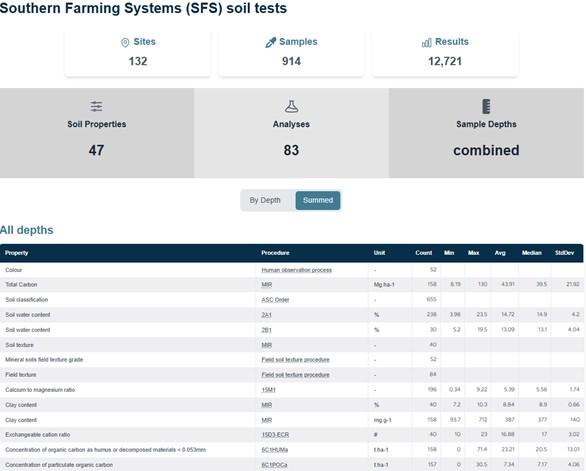
Above: An example of the statistics shown for an unlocked dataset provided by Southern Farming Systems.
New features in the VAS map portal provide improved soil information at both national and state levels. For example, users can now easily access links to the Soil and Landscape Grid of Australia and can create a report of modelled soil properties for a selected location.To further enhance the usefulness of VAS, we have also improved the public datasets, with soil series maps now linked to the explanatory notes, where they exist,” A/Prof Dahlhaus said.
VAS Business Plan and Governance Framework
To inform the business plan, the project team collected feedback from project partners to explore their experiences with both VAS and soil data management more broadly. Analysis of the insights has uncovered opportunities for the further development of VAS beyond the Soil CRC.
A proposed socio-technical data governance framework has been developed to guide data stewardship and ensure the longevity of FAIR data, rights of access and use, and trust. The VAS Business Plan and Governance Framework have been prepared and are being reviewed by the Soil CRC.
Social research insights
The project team conducted social research to examine the perceptions, role and application of VAS by project partners, and published the findings in a journal paper
last year.The research identified that there is broad agreement amongst project partners regarding the contribution of VAS, and anticipated expectations for soil data sharing and management using the portal. However, data custodians remain reluctant to openly share data for a number of complex reasons. These challenges are being address under Phase 3 of the project.
Collaboration at its core
A/Prof Dahlhaus said the VAS project partners and data custodians are core to its success.
The continued involvement of our partners helps us maintain VAS as a leading interoperable spatial knowledge system for soils-related data across Australasia.
Their efforts to upload and share their soil data, continue to use the system, contribute to its improvement and promote its value within their networks is what makes VAS valuable.
The project team is working with VAS partners to showcase how they are using the portal and what benefits they have received.
I’m excited about what we can build together as an enduring and important component of the national soil data systems. I hope the next 12 months will see us take major steps toward the long term vision for VAS,” A/Prof Dahlhaus said.
What comes next
A Community of Practice made up of the participating grower groups is contributing to the identification of key use cases. These are being developed to demonstrate the value of VAS outcomes for project partners and industry.
A/Prof Dahlhaus said further enhancements are being made to the VAS portal, including improvements to the self-service system and public (open) datasets, and the addition of self-paced education modules.
Ongoing research will assess VAS’s contribution as a federated soil data knowledge system. The research will provide evidence that will inform and guide future data federations,” he said.
Find out more
Soil Health Indicator Workshops Identify National and Regional Priorities
 |
|
A series of Soil Health Indicator Workshops delivered across Australia is helping farmers and researchers identify practical, regionally relevant ways to measure and manage soil health.
Led by CeRDI Principal Research Fellow A/Prof Nathan Robinson , the workshops form part of a national Soil CRC project focused on improving how soil health is assessed on-farm. Nathan’s work aims to support farmers in selecting indicators that are not only scientifically robust, but also practical and useful for everyday decision-making.
-
Continue reading...
Through this project, five grower groups are contributing local knowledge and experience to complement scientific expertise. Workshops have been held with:
- Agricultural Innovation & Research Eyre Peninsula (20 May 2026, online)
- Southern Farming Systems (5 March 2026, Hamilton VIC and 2 March 2026, Inverleigh VIC)
- Holbrook Landcare Network (26 February 2026, Holbrook NSW)
- Central West Farming Systems (3 February 2026, Condobolin NSW)
- West Midlands Group (22 August 2025, Dandaragan WA)
Each workshop has followed a consistent process while allowing for regional differences, with participants working to identify and prioritise soil health indicators that matter most in their local farming systems.
Workshop approach
Nathan’s workshop design encourages participants to consider soil health from multiple perspectives, including visual observations alongside chemical, physical and biological measurements.
Across all sessions, farmers and project partners have used structured discussions and a simple voting process to narrow down priority indicators. This approach blends research knowledge with practical experience, ensuring outcomes reflect real-world conditions and management needs.
Activities within the workshops have also explored how land use and management practices influence soil condition, supporting participants to link indicators directly to farming decisions.

Workshop participants and West Midlands Group (WMG) team working through a land use and management practices activity
as part of the WMG workshop 22nd August 2025. Image source: West Midlands GroupKey themes emerging across workshops
While priorities vary by region, several common themes have emerged from the workshops:
- Soil constraints impacting production, such as water repellence and poor infiltration, particularly in sandy soils
- Root health and depth, recognised as critical for crop establishment and resilience
- Nutrient dynamics, including nitrogen fixation and the availability of key nutrients like phosphorus and potassium
- Soil pH management, especially its role in guiding effective lime application
- Practical paddock observations, such as crop vigour, groundcover and visual soil condition
Participants also highlighted the importance of integrating existing tools into soil health assessment. Commonly used tools include NDVI imagery, yield mapping and plant tissue testing, alongside more detailed soil testing and physical measures such as penetrometer readings.
Barriers and challenges
Discussions across the workshops have consistently highlighted the challenges farmers face in implementing soil health monitoring, including:
- Limited time to collect and interpret data
- Complexity or inconsistency in laboratory test results
- Difficulty linking measurements to clear management actions
- The need to balance new practices with day-to-day farm operations
These insights are helping ensure the project remains grounded in the realities of farming systems.
Next steps
Insights from all workshops will contribute to refining a shortlist of key soil health indicators tailored to each region. The aim is to identify measures that are simple, reliable and clearly linked to management decisions.
By combining farmer input from multiple regions with national research, the project is building a more practical and consistent approach to soil health measurement—ensuring indicators are not only scientifically sound, but genuinely useful on Australian farms.
Want to know more about the soil performance indicators project?
The Soil CRC have recently highlighted the indicators project on their website with a Research findings fact sheet
and video .
Sustainability and Natural Capital Reporting Workshop
 |
|
On 22 April, CeRDI held an online event the “Sustainability and Natural Capital Reporting Workshop,” bringing together researchers, farmers, catchment managers, industry representatives, and advisers to discuss how to make sustainability and natural capital reporting easier and more useful for land managers.
The workshop explored how better digital tools and data systems could reduce duplication and simplify reporting processes. CeRDI’s Prof Francisco Ascui introduced natural capital reporting—how we measure and value environmental assets like soil, water, and biodiversity—and shared practical examples of how reporting can be done. CeRDI Program Delivery Manager, Richard Archer, also demonstrated a new web portal being developed by CeRDI to help streamline reporting.
-
Continue reading...
This workshop is part of the Streamlining Sustainability Reporting for Land Managers
project funded by the Food Agility CRC, with a strong focus on gathering feedback from stakeholders to guide future development.Discussions highlighted that current reporting systems are often fragmented, time-consuming, and don’t always reflect what is happening on the ground. However, there was strong interest from participants in engaging with reporting systems that are credible, useful and fair. Key needs identified included trustworthy data systems, meaningful indicators, clear communication of results, and incentives for participation.
Overall, feedback on the new reporting portal was positive. Participants saw its potential to reduce the reporting burden on land managers while making it easier to share useful, credible information with governments, industry, investors, and the wider community.
From Research to the Paddock: Soil CRC Workshop
 |
|
|
Image source: Soil CRC |
|
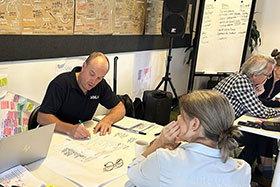
CeRDI Principal Research Fellow A/Prof Nathan Robinson recently joined the Soil CRC Accelerator Innovation Incubator Workshop, a two-day event focused on helping research move beyond the lab and into real-world use.
The workshop brought together researchers, farmers and industry groups to explore how promising Soil CRC projects could deliver practical value on the ground. Participants looked at what farmers need, how new ideas could be adopted, and what steps are required to turn research into usable tools and practices.
Projects covered topics such as soil testing and diagnostics, improving soil water use, new fertilisers, and ways to address subsoil constraints. Farmer organisations and universities from across Australia took part, with strong input from grower groups to help ground ideas in real farming conditions.
-
Continue reading...
The sessions encouraged teams to test their assumptions, refine their ideas and think about how their work could be applied in practice. Many participants highlighted the benefit of bringing researchers and industry together to focus on real-world impact.
The program is continuing with follow-up coaching sessions to help teams further develop their ideas. It will conclude with an online showcase in June, where projects will present their work to farmers, industry and other stakeholders.
Overall, the initiative reflects the Soil CRC’s focus on speeding up the adoption of research and delivering practical benefits to the agricultural sector.
For more information read the full article
about the workshop, or to hear from some of the participants view this short video .
CeRDI Platform Connects Drought Resilience Trials
 |
|
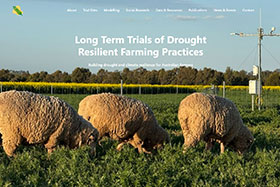
The project “Long-term economic, environmental and social outcomes of drought resilience practices in mixed farming”, funded by the Australian Government’s Future Drought Fund, is examining how mixed farming systems respond to drought and climate variability. A key question underpinning the research is whether greater system diversity can enhance resilience to increasingly frequent and severe climate shocks.
CeRDI’s contribution to the project is playing a crucial role in enabling the project’s integration, data management, and communication. A new website developed by CeRDI serves as the primary digital hub for the initiative, bringing together information on the overall project, trial sites, and partner activities. The platform will support the project over its five-year lifespan (2024-2029) by publishing news, upcoming events, datasets, and research outputs as they become available.
The website is available at: longtermtrials.cerdi.edu.au
-
Continue reading...
Beyond this digital infrastructure, Federation University leads the management of data generated across all trial sites. These data also underpin a comprehensive systems modelling effort led by the University of Tasmania, enabling results to be extended spatially and tested under future climate scenarios.
The project itself is delivered through a consortium of partners. The University of Melbourne leads the overall project and runs the central experiment on its Dookie Campus. Regional trials are conducted by Birchip Cropping Group and Southern Farming Systems, while Riverine Plains leads extension activities linked to the Dookie site. The Tasmanian Institute of Agriculture, University of Tasmania, runs complementary trials focused on grazing systems and pasture resilience.
Engagement with end-users is central to achieving project impact. Extension and communication activities are embedded across the regional trials, led by farming systems groups and the Tasmanian Institute of Agriculture, and include on-farm demonstrations of regionally co-designed practices. These efforts are supported by social research using a living laboratory approach, which helps identify the key enablers and barriers to adopting new knowledge generated by the project. Federation University contributes to the living laboratory and supports extension activities through the project website.
CeRDI Director Prof Helen Thompson
and Research Fellow Dr Chris Bahlo travelled to the Dookie trial site to introduce the new project website to the project steering committee. CeRDI’s role is to connect research, data, and stakeholders across the project via the new website. The 2-day event included presentations from all project partners as well as sister project partners, engagement with project participants, and a tour of the Dookie trial site.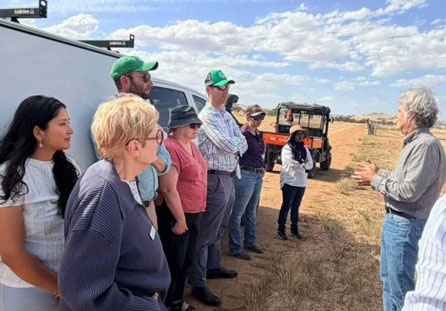
Tour of Dookie trial site (Photo supplied by Angus Dunne)
Supporting Climate-Ready Future for Central Highlands Agriculture
 |
|
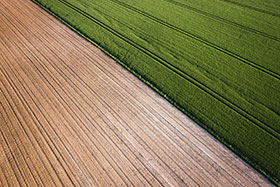
CeRDI is helping build a more climate-resilient agricultural future for Victoria’s Central Highlands, delivering a research project that brings local knowledge, scientific insight and regional collaboration together. Through its work on the Resilient Agriculture project, CeRDI has provided an evidence-based foundation to guide farmers, industry and policymakers toward practical solutions for a changing climate.
The project, undertaken by researchers from CeRDI and across Federation University, was delivered for Commerce Ballarat (lead partner) in collaboration with Agriculture Victoria and Central Highlands councils. It marks the first of five initiatives under the Central Highlands Drought Resilience Plan (CHDRP).
Researchers Dr Alison Ollerenshaw (lead researcher) and Dr Carolyn Staines (CeRDI) and Assoc Prof Ayon Chakraborty drew on both existing literature and engagement with local farmers and stakeholders, ensuring the study reflects on-the-ground realities and supports actionable outcomes.
Advancing Data Collaboration
 |
|
|
Dr Thomas Shafee |
|
CeRDI welcomes Dr Thomas Shafee as a new member of the team. A research data specialist, Thomas recently joined CeRDI as part of Federation’s partnership with the Australian Research Data Commons (ARDC). He is a lead for the ARDC’s Australian Dataspaces Hub and brings deep expertise in research data ecosystems, with experience spanning academia, industry, and scholarly publishing.
His research background ranges from blue-skies evolutionary biochemistry and data science to highly applied medical and agricultural biotech.
Thomas’s work now focuses on how better data sharing and coordination can bring together people with different skills to tackle complex problems. He also uses advanced analytics and machine learning to make the most of valuable data that can be difficult and costly to collect. He has long been involved in promoting open data and knowledge, contributing to projects like linked open data and working with organisations such as the Wikimedia Foundation and Open Access Australasia.
Sharing Knowledge across the Mallee Region
 |
|
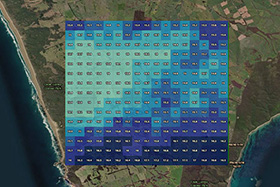
Mallee Sustainable Farming hosted three events across South Australia, Victoria and New South Wales, bringing Soil CRC research directly to regional communities. CeRDI Research Associate Peter Weir delivered a presentation on the Rainfall Mapper , a tool CeRDI developed based on his Soils CRC PhD research. The Rainfall Mapper provides access to rainfall data for selected regions, offering a visual representation of rainfall patterns and highlighting changes in intensity over time.
Sarah Day, Mallee Sustainable Farming Communication and Extension Manager, said, “The presentations were well received, with strong audience engagement.” The presenter's willingness to travel to share knowledge with the farming, advisory and research communities was appreciated
-
Continue reading...
More information about recent Soil CRC extension activities: Soil CRC extension activities share research insights - Soil CRC
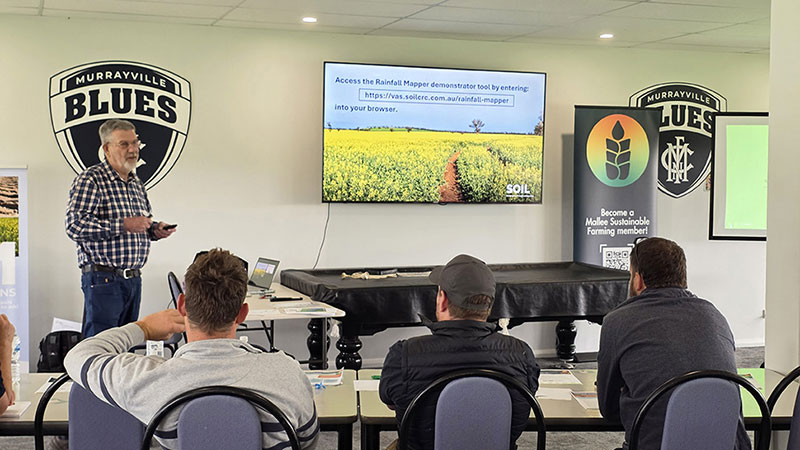
Dr Peter Weir demonstrating the Rainfall Mapper (Image source: Soil CRC)
News Snippets
 |
|
Exploring Australia’s Leading Climate Modelling Capability. In May, CeRDI staff welcomed Prof Andy Hogg and senior colleagues from ACCESS-NRI for an insightful presentation on the Australian Earth System Simulator. Funded through the National Collaborative Research Infrastructure Strategy (NCRIS), ACCESS-NRI supports cutting-edge research with a comprehensive modelling framework that integrates atmospheric, ocean, sea-ice and land surface systems alongside chemical and biological models. As the largest coupled modelling system in the Southern Hemisphere, the simulator offers powerful tools for understanding complex Earth processes. The session provided CeRDI researchers with valuable first-hand insights with future meetings planned for shared insights around advanced analytical tools and outputs.
Publications
 |
|
Luke, H., Allan, C., Cooke, P., Kilham, S., Ollerenshaw, A., Craig, N., Scholz, N., Fear, D., Kruger, S., Telfer, J., Alexanderson, M., Davenport, D., Haigh, Y., Brown, S., & Angel, K. (2026). Deliberative project design for understanding and working within complexity in agricultural systems. Frontiers in Complex Systems, 4: 1749741. Doi: doi.org/10.3389/fcpxs.2026.1749741
This paper explores new ideas and technologies could help make agriculture more resilient, profitable, and sustainable. However, they are introduced into a complex real-world context, where farmers make decisions based on a mix of social, financial, and environmental factors. Traditional research methods often assume that change happens in a simple, step-by-step way, but this is rarely how things work in practice. In this paper, two studies were used to demonstrate how projects can be designed to build understandings of agri-food systems, while embracing complexity.
-
Continue reading...
Osunkoya, O.O., Shi, B., Chadha, A., Perrett, C., Florentine, S., & Dhileepan K. (2026). Soil and plant chemical profiles of invasive Cyperus aromaticus (Cyperaceae) and co-occurring pasture species across land-use types: potential implications for invasion and plant–soil feedbacks. Australian Journal of Botany 74, BT25032. connectsci.au/bt/article/74/3/BT25032/271865/Soil-and-plant-chemical-profiles-of-invasive
Biological invasions can disrupt ecosystems and affect how they function. One such invasive plant, Cyperus aromaticus (also known as Navua sedge), has recently spread along coastal areas of far north Queensland, forming dense stands that impact both farmland and natural environments. CeRDI’s Dr Aakansha Chadha took part in a study that looked at how the invasion affects soil properties and compared the chemical makeup of this plant with nearby pasture species. The results showed that the weed’s impact on soil varied depending on how the land was used. It also identified that this weed can change soil conditions in ways that help it spread, while also reducing the value of pasture for grazing. This highlights the importance of managing the weed to protect both the environment and agricultural productivity in north-eastern Queensland.
About CeRDI
The Centre for eResearch and Digital Innovation (CeRDI) is a research centre at Federation University Australia focused on:
- the application of information and communications technology (ICT) and the development of innovative, world class knowledge management systems;
- significantly advancing the digital literacy and knowledge management capabilities of partner organisations;
- fostering partnerships for the development and implementation of eResearch with industry, government and academia; and
- measuring the impact of eResearch and digital innovation through longitudinal research.
Contact CeRDI
For further details about CeRDI’s diverse portfolio of research please visit our website: www.cerdi.edu.au, or contact Director, Associate Professor Helen Thompson: h.thompson@federation.edu.au
Mailing Address
Centre for eResearch and Digital Innovation
Federation University Australia
PO Box 691
Ballarat Vic 3353
Office Location
Suite 15, Greenhill Enterprise Centre
Ballarat Technology Park
University Drive
Mount Helen Vic 3350
Phone: +61 3 5327 9314
Email: support@cerdi.edu.au
Subscribe to the CeRDI Newsletter Mailing List
I would like to subscribe to the CeRDI Newsletter Mailing List to receive notifications of future CeRDI Newsletters.
If you have any feedback, please email newsletter@cerdi.edu.au