



CeRDI Newsletter Spring 2025
In this issue:
- Message from the Director
- Rainfall Mapper
- Vic Drought Hub horticulture project
- Impact of onshore renewable energy facilities on threatened birds
- Tracking Latham’s Snipe and the Tasmanian Land Conservancy
- NRM Regions Australia: In the Tent with CeRDI
- Exploring the impact of litter on bird behaviour and survival
- Visualising Australasia’s Soils: Latest news
- Chinese Delegation visit CeRDI
- Birds, Litter and Citizen Science feature on ABC Radio
- Staff Profiles: Ross Mann, Carmel Wallis, Mohammad Saud, and Esther Rosenberg
- News snippets
- HDR news
- About CeRDI
- Contact CeRDI
Message from the Director
 |
|
|
Distinguished Professor |
|
Welcome to our final newsletter for the year. This edition celebrates the diversity of research and technology innovation at CeRDI in collaboration with partners across community, industry, and government.
A standout achievement has been the incredible response to the launch of Rainfall Mapper  - a groundbreaking tool giving farmers unprecedented insights into rainfall variations across their properties. Developed by CeRDI from the research outcomes of a Soil CRC PhD project led by Dr Peter Weir, this first-of-its-kind innovation is already delivering real impact on the ground.
From rainfall mapping to advancing horticulture through the Vic Drought Hub, our collaborative projects delivering significant benefits across diverse industries. Dr Birgita Hansen is leading research on the effects of renewable energy on threatened birds, while also working with Masters student Saundra Le Clair to track Latham’s Snipe in partnership with the Tasmanian Land Conservancy.
In this issue, you’ll also find updates on PhD research exploring how litter affects bird behaviour, the latest developments from Visualising Australasia’s Soils, and highlights from a recent visit by a Chinese delegation. Our researchers have been sharing their expertise widely, including interviews on ABC Radio.
As we wrap up 2025, we’re excited about the opportunities and collaborations the new year will bring. From all of us at CeRDI, thank you for your support and we wish you a joyful festive season and every success for 2026.
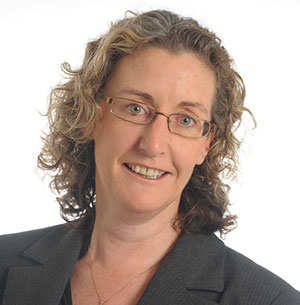
Distinguished Professor Helen Thompson
Director, CeRDI
December 2025
Rainfall Mapper
 |
|
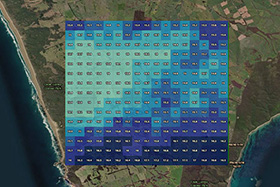
A new app is helping farmers view rainfall distribution like never before. Federation University researchers have developed a new tool, Rainfall Mapper, that reveals spatial variations in rainfall over short distances, providing farmers with an unprecedented level of detail about rainfall on their properties.
Rainfall Mapper enables users to select tiles that are 500 by 500 metres for specific locations and time periods - allowing the tool to be used by farmers to gain greater insight into rainfall information specific to their property.
With increased access to information about past rainfall, the tool enables farmers to make more informed decisions, including crop planning and irrigation strategies.
-
Continue reading...
Available to the public on a trial basis, Rainfall Mapper is a standalone, online application developed by the technical team from the Centre for eResearch and Digital Innovation (CeRDI) based on the initial work done by Dr Peter Weir during his Soil CRC PhD project.
The trial results will help improve the design of the tool to enhance the user experience, enabling the research team to gain a deeper understanding of the varied, practical applications of the tool. This will guide the research direction of optimising the practical value of Rainfall Mapper for different users.
The project was developed from Dr Weir's PhD research, which involved determining soil moisture content at the paddock level and investigating the spatial variation in rainfall within an area.
It is an area measurement - not a point measurement from a single location and that means the app has the capability of picking up rainfall details of localised thunderstorms that often occur unmeasured between official Bureau of Meteorology gauges", Dr Weir said
Regional rain gauges are sparsely located with an average distance of around 30-50 kilometres between these single-point measurements.
We're very careful with our disclaimer because the rainfall amounts are dependent on the modelling of the weather radar signal to estimate the amount of rain that has fallen in that specific area, but the results are extremely interesting.
Rainfall Mapper uses data sourced from the official Bureau of Meteorology (BoM) rain gauge network from across Australia, merged with the BoM's weather radars to generate the Rainfields3 dataset, which is available online from the National Computing Infrastructure - Australia's premier provider of high-performance computing resources that supports research and collaboration across science, government, and industry.
It is currently available as a component within the Visualising Australasia's Soils
(VAS) portal - a long-running Soil CRC initiative that brings together soils research, information and activities from across Australia and New Zealand.CeRDI Principal Research Fellow Associate Professor Peter Dahlhaus, who supervised the project, says there are many potential applications for the Rainfall Mapper, including for anyone who wants information specific to their property.
If you're a farmer and you want to seed your paddock, you would like to know how much rain you've had since the last harvest, and when and where the rain has fallen", Assoc Prof Dahlhaus said.
It's farmers and farming groups that are currently showing interest in the app. Apart from the agricultural sector, I anticipate strong interest from people involved in catchment management and those living in high-rainfall areas. Biodiversity groups are also likely to find this tool valuable. The resolution is so much finer than any other tool that is available and rainfall patterns have shifted due to climate change. Instead of getting normal reliable winter rain, we're now getting more scattered intense rain events and scattered showers.
The tool relies on modelled data that converts reflectivity picked up by weather radar - often detected up to a kilometre off the ground - and converting that to rainfall. Assoc Prof Dahlhaus says the research is "shining a light in a dark corner" to show already available information in a user-friendly way.
Rainfall Mapper includes two years of data and allows users to select specific date parameters. The researchers demonstrated the concept at the Soil CRC conference in 2024 and say the interest that was generated was far beyond their expectations.
Now we are going on to the next step, which is to convert this rainfall data into soil moisture at a finer resolution than we have been able to do so far", Assoc Prof Dahlhaus said.
The important point is not just the rain that has fallen on a specified area - this is valuable information - but a lot more interest will come when people are able to say how much water is in the bucket.
Dr Weir's PhD research was supported by the Soil CRC with funding from the Australian Government.
This story was first published on 7 November 2025 by Federation University News
.For further information about this research visit Peter Weir’s profile page on the CeRDI website.
Vic Drought Hub horticulture project
 |
|
Almond, summer-fruit and pear tree-survival signatures focus of $7.8m project to better manage drought conditions in Australia’s $16.3b horticulture industry.
A project to establish tree-survival signatures for water stress in orchards is one of only five projects nationally to receive funding in Round 2 of the Future Drought Fund (FDF) Long-term Trials of Drought Resilient Farming Practices Program.
Through extensive research, the Victoria Drought Resilience Adoption & Innovation Hub (Vic Hub) project will develop guidelines and tools to help Australia’s $16.3 billion horticulture industry better manage drought conditions.
-
Continue reading...
Dr Sara Hely, Director of the Vic Hub, which is supported by the Australian Government’s Future Drought Fund
, said the $7.8 million project will focus on monitoring orchards for productivity impacts under different water-stress scenarios in almond, pear and summer-fruit tree crops. The project will run until 2029-30. 
The $7.8m project will focus on monitoring
orchards for productivity impacts under
different water-stress scenarios, including
in pear crops. Here a dendrometer is precision
measuring changes in fruit diameter.FDF received over 100 applications nationally for this highly competitive round. To be selected as one of only five highlights the importance of this project for Victorian horticulture and underscores the Vic Hub’s role in drought-preparedness and drought-resilience research.
Led by The University of Melbourne, the project brings together three other Vic Hub partners
- Federation University (as the Digital Platforms Innovations lead), Agriculture Victoria and the Mallee Regional Innovation Centre (MRIC, as the North-West Irrigated Horticulture Node lead), with the latter two also facilitating direct peak body and grower engagement. MRIC CEO Rebecca Wells said the critical work would be done hand in hand with industry, providing growers with key information for future decision making when faced with drought.
When we think about the future of horticulture and the many possibilities for how it could look, considering changes to climate, policy, market and more, there is likely to be new knowledge required in terms of how crops are managed and handled, particularly in relation to drought", Ms Wells said.
This project may be able to give industry some assurance around measures or steps that can be taken under those conditions.
The Centre is looking forward to working with researchers at The University of Melbourne, Agriculture Victoria and Federation University, and particularly with Agriculture Victoria to connect industry to the research.
Dr Hely said Australian growers facing drought are looking for better ways to make decisions.
The FDF is backing grant recipients to test new farming approaches designed to strengthen drought resilience. By generating solid evidence, we can give growers the knowledge and confidence to try these practices on their own farms.
I could not be prouder - this is a huge achievement for our Hub. This funding recognises the strength of our collaborative approach and our commitment to delivering real outcomes for farmers and the horticulture industry.
Federation University is partnering on the project and will be supporting the delivery of important digital decision support tools for horticultural producers.
For more information about the Vic Hub’s work please visit the Vic Hub website. To keep up to date, sign up to the Vic Hub newsletter: vicdroughthub.org.au
Impact of onshore renewable energy facilities on threatened birds
 |
|
|
Latham’s Snipe BM after processing |
|
In June 2025, Federation University together with the Arthur Rylah Institute for Environmental Research (ARI; lead institute) received funding to conduct species-specific research to address the impacts on wildlife of renewable energy developments, such as wind turbines. In collaboration with species experts, extensive fieldwork and stakeholder engagement activities were designed to generate and synthesise up-to-date ecological information for seven species listed as threatened under the EPBC Act (1999).
One of those species is Latham’s Snipe, a migratory shorebird which was recently uplisted to Vulnerable under the EPBC Act. This listing was informed by the research conducted by Dr Birgita Hansen, Senior Research Fellow at CeRDI.
-
Continue reading...
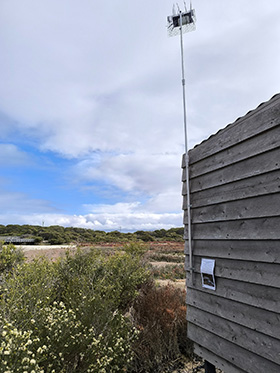
A Bluetooth receiver installed on a tower at
Fox Lake in RobeIn October and November, Dr Hansen led a field program across two major Latham’s Snipe populations in Peterborough, Victoria, and Robe, South-eastern South Australia. With the support of a large volunteer team 30 global positioning system (GPS) Bluetooth transmitters were deployed and a total of 40 birds were tagged across both sites.
Real-time data from the tagged birds is already revealing unexpected movement patterns. The data shows birds commuting nightly between small wetlands within townships and nearby farmland. Some Robe birds have travelled unexpectedly long distances-up to 10 km-significantly advancing our understanding of daily movement behaviour in this species.
Ongoing GPS tracking will continue to generate extensive insights into flight behaviour and flight heights in these rural landscapes. This evidence that will inform regulatory guidance for renewable energy developments, including wind farms, by providing robust data on bird movement patterns and flight heights.
The success of this project has been made possible through the incredible volunteer support from local snipe surveyors and members of Friends of Shorebirds SE, the Victorian Wader Study Group, and Nature Glenelg Trust. Early tracking data is already revealing how snipe adapt to changing landscapes as wetlands dry, providing critical knowledge for future habitat management.
The research is funded under the Commonwealth’s Department of Climate Change, Energy, the Environment and Water (DCCEEW) under the Renewables Environmental Research Initiative (RERI).
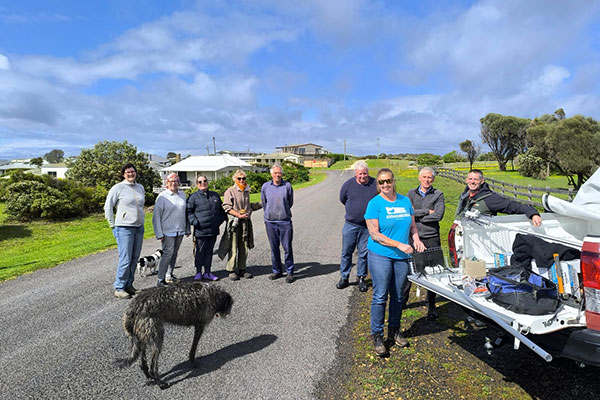
Peterborough locals and volunteers. ANU PhD student Lori Gould, who has been working on the Latham’s Snipe Project in Canberra, is in the foreground.
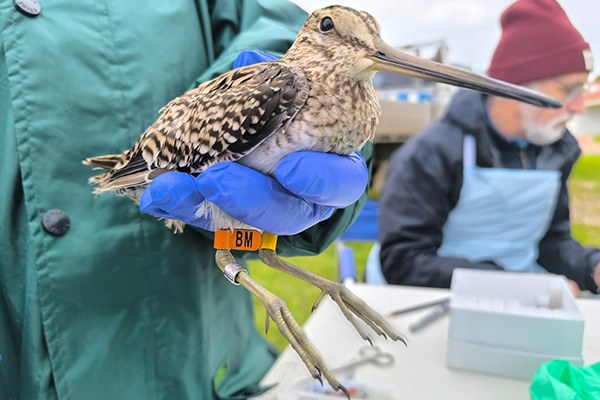
Latham’s Snipe BM after processing
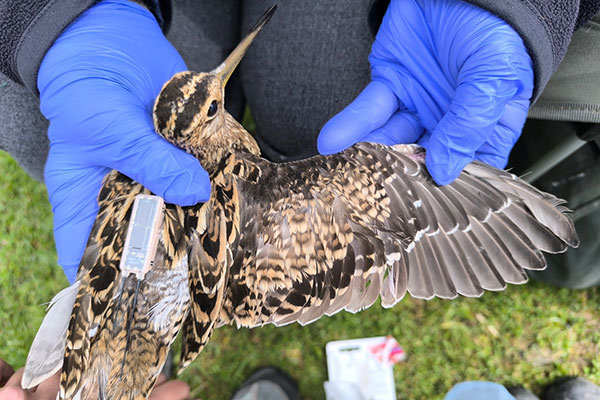
A Latham’s Snipe fitted with a Bluetooth Nano GPS device
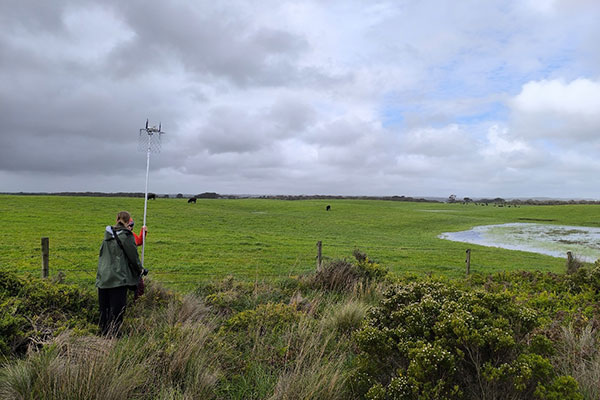
Searching for tagged snipe in Peterborough’s rural landscapes
Tracking Latham’s Snipe and the Tasmanian Land Conservancy
 |
|
A new five-year wetland restoration program funded by the Ian Potter Foundation and delivered by the Tasmanian Land Conservancy (TLC), has commenced with a focus on wetland restoration and Latham’s Snipe population dynamics in Tasmania’s Central Plateau. This work will provide a unique comparison to other study sites and deepen understanding of habitat use across the species’ range.
The TLC is a not-for-profit science and community-based organisation dedicated to acquiring and managing land for conservation purposes. One of its properties, Silver Plains in central Tasmania, supports a significant highland population of Latham’s Snipe.
-
Continue reading...
In partnership with the TLC, CeRDI’s Dr Birgita Hansen is leading an investigation into the ecology and habitat use of Latham’s Snipe at Silver Plains. This initiative includes an industry-funded Masters project being conducted by Federation University student Saundra Le Clair. Birgita and Saundra visited the site in September this year to commence the monitoring activities.
Reflecting on the research Dr Hansen stated
It's an exciting time to be researching the Latham Snipe species. Recent, substantive funding, through this and other projects (including the impact of onshore renewable energy facilities on threatened birds project) will deliver important insights about the species and how we can better protect them, and their habitats. The need to understand potential impacts of wind farms is underscored by the recent change in Latham’s Snipe conservation status to 'threatened' species.
The Latham's Snipe research will be a key theme in the TLC led wetland ecosystem restoration program, which was recently awarded nearly $1m by the Ian Potter Foundation
with Federation University as a key partner.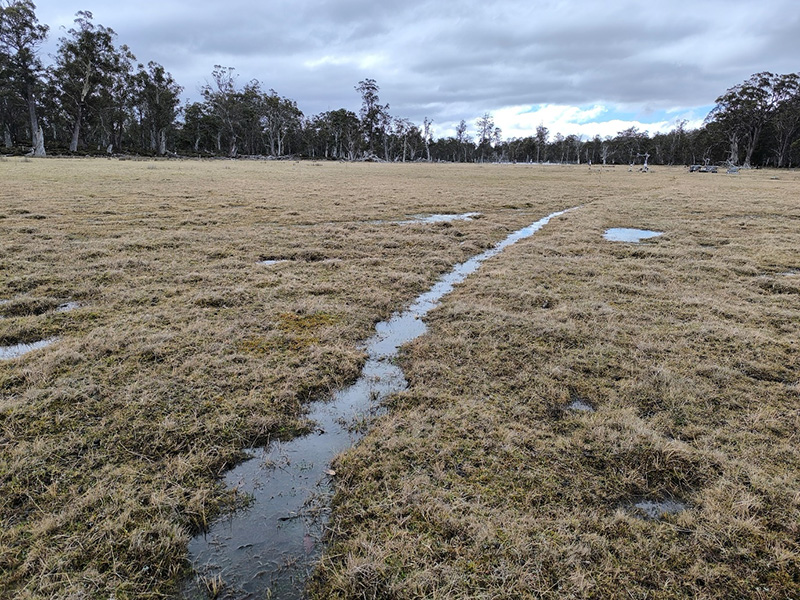
The unique highland marshes of Silver Plains have experienced extensive historic drainage, which the new wetland restoration program led by TLC aims to ameliorate.
NRM Regions Australia: In the Tent with CeRDI
 |
|
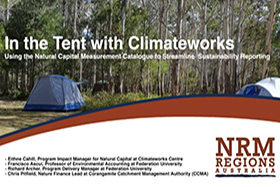
In October, Natural Resources Management (NRM) Regions Australia hosted an ‘In the Tent’ webinar focused on the Natural Capital Measurement Catalogue (NCMC) and its role in streamling environmental sustainability reporting.
The NCMC is an open, scientifically rigorous resource designed to help users identify suitable metrics, methods and data sources for measuring natural capital assets, flows of services or benefits, and organisational impacts or dependencies on nature. It supports a wide range of stakeholders - including landholders, government, NGOs, corporations and the financial sector - by providing access to localised data and information. This enables informed decision-making through observed changes to natural capital at different scales.
-
Continue reading...
The webinar featured CeRDI’s Prof Francisco Ascui, Professor of Environmental Accounting and NCMC Technical Consultant, and Richard Archer, Program Delivery Manager. During the session Francisco provided an overview of the catalogue, illustrating its breadth of application with practical examples. Richard then demonstrated how the NCMC could be applied to sustainability reporting for land managers.
To view the session: www.youtube.com/watch?v=SO9mhwsSPKE
Further information Natural Capital Measurement Catalogue can be found here: naturalcapitalmeasurement.org/
Exploring the impact of litter on bird behaviour and survival
 |
|
A new study being conducted by CeRDI PhD candidate Hannah Faraone aims to shed light on the varied and often harmful interactions between birds and litter and explore behaviours ranging from ingestion and entanglement to the use of human-made materials for nesting. While these interactions are widespread, how bird populations are affected by litter remains largely unknown, particularly in land-based ecosystems.
As human and animal habitats increasingly overlap, research is becoming more important to help determine the impact litter has on bird survival, health and other factors like reproductive success.
-
Continue reading...
Birds are fascinating, they're such curious animals and are so smart in a lot of different ways and in addition to that, litter is everywhere", Ms Faraone said.
The study has stemmed from that - that bird-litter interactions are something that you can often see by looking out your window. We’ve got these amazing animals and then we have these littered environments and there are species that are adapting and there are those that aren’t doing as well.
The project is drawing on contributions from citizen scientists, with geo-located images analysed to determine what types of interactions are occurring and which species are involved.
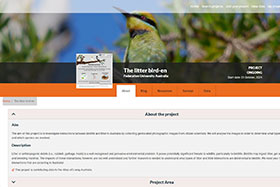
The Litter Bird-en website
has been created for the project, and citizen scientists can upload images of birds interacting with litter there, as well as follow the project’s progress. The website sits within the Atlas of Living Australia , a collaborative, digital, open infrastructure that pulls together Australian biodiversity data from multiple sources, making it accessible and reusable.We are aware from the images that there are other ways that birds interact with litter. Bowerbirds have used litter to attract mates to their bower. Other birds have been using rubbish as tools", Ms Faraone said.
There are also scavenger birds who will go through any food-related take-away rubbish whenever people leave food and other plastic and rubbish around.
The researchers have also witnessed cockatoos and corellas playing with litter, including a group of corellas throwing around an empty cigarette packet as they would normally play with a tuft of grass.
We want to know why that's happening, what they're doing with the litter and if we can learn more about that, we can move on to what the impact of that is", Ms Faraone said.
Ms Faraone said.
By creating a database, we’ll get records and then move into what those impacts are. There are some very obvious ones, like entanglement, where there are injuries and in worst cases mortalities.
But it might not always be a negative result. So, we need to look at the other consequences as well. The interaction is the top level - before we can figure out what impacts there are, we really need to know what they're doing in the first place.
Ms Faraone’s previous research has focussed on pollution in the environment, including the impact on macroinvertebrates in wetlands. The project continues her interest in the interaction of pollution in the environment and the different ways that ecosystems are impacted by human activity.
This research builds on previous work by CeRDI and the Department of Energy, Environment and Climate Action (DEECA) to develop the LitterWatch Victoria program, a state-government initiative designed to support community litter monitoring in Port Phillip and provide information for policy formulation. The PhD includes a three-month internship with DEECA that will involve supporting the management and maintenance of the LitterWatch portal
.Ms Faraone says the opportunity to complete the research with CeRDI has allowed her to develop new skills for the PhD, tapping into CeRDI’s expertise in developing advanced information and communication technologies.
I have been learning a lot about coding at the moment for another chapter of the PhD which has been an incredible skill to learn", Ms Faraone said.
And working with citizen scientists has been fantastic - I'm really grateful for that opportunity and that was something coming into the PhD that I wanted to do. With other chapters, I am also lucky enough to be able to develop both field and lab-based skills.
Ms Faraone hopes the findings from this research will provide vital information for policymakers and conservationists, guiding the development of effective strategies to mitigate the risks that plastic pollution poses to birdlife.
People want to know what they can do to better protect these birds, but we don’t know enough about what the birds are doing to begin with", Ms Faraone said.
If we can go back to the start or as close to the start as possible and learn more about the birds’ interaction with litter and work from there, it will become easier to create the advice and the recommendations to help them.
For more information please contact Hannah Faraone.
Visualising Australasia’s Soils: Latest news
 |
|
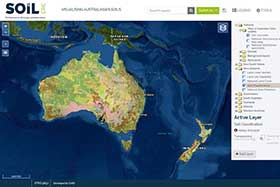
The latest news and updates from Visualising Australasia’s Soils (VAS) are featured in the latest VAS newsletter. Supported by funding from the Cooperative Research Centre for High Performance Soils (Soil CRC ) VAS is a comprehensive project providing Soil CRC participants and the broader agriculture industry, with access to data and information about Australasian soils.
The newsletter outlines some of the many changes to the VAS portal that includes a major refresh to the home page with a cleaner design and improved navigation leading to a more intuitive user experience.
-
Continue reading...
One standout development for VAS is the launch of the Rainfall Mapper
, which has already generated strong community interest. Recently featured in the Herald Sun and aligned with the Bush Summit in Ballarat, this innovative tool highlights the cutting-edge work emerging from VAS and celebrates Dr Peter Weir’s PhD research leveraging the BoM’s Rainfields-3 system.As the VAS project enters its final 15 months, technical and strategic activities are accelerating. A key focus is supporting partners to develop real-world case studies that demonstrate the value VAS delivers. Funding is available to help partners showcase these outcomes, ensuring momentum and broadening agricultural sector engagement.
The VAS team is expanding with Dr Joel Epstein, Dr Ben Fest, Anthony Dale, Mohammad Saud, and Esther Rosenberg joining the CeRDI-VAS team. Anthony, Mohammad and Esther are Federation University students completing Co-Op placements with CeRDI. Joel will lead business planning and governance and Ben will work closely with partners to showcase VAS capabilities.
Read more about these latest VAS developments in the newsletter here
Chinese Delegation visit CeRDI
 |
|
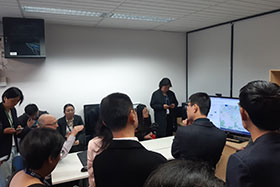
Federation University recently hosted a session for 25 delegates from the China Education Association for International Exchange (CEAIE). As part of their program, the delegates visited CeRDI and were welcomed by CeRDI Director, Distinguished Professor Helen Thompson. Helen provided an overview of CeRDI’s work, with Richard Archer then demonstrating some of our latest technologies and portals developed by the team.
The broader program delivered by Federation offered delegates academic workshops, classroom immersion, project-based learning, and industry visits - providing participants with insights into innovative tools for teaching and research to apply in their home institutions. The 2025 training program focused on Artificial Intelligence (AI) and was attended by academics in information technology from Chinese colleges and universities. The aim was to strengthen their capacity in curriculum development, research, and applied teaching practices.
-
Continue reading...
This collaboration reflects a shared commitment between CEAIE and Federation University to educational innovation, academic capacity-building, and fostering long-term international engagement between China and Australia. Building on the success of the inaugural cohort, the program is set to become a recurring, annual initiative hosted in Australia.
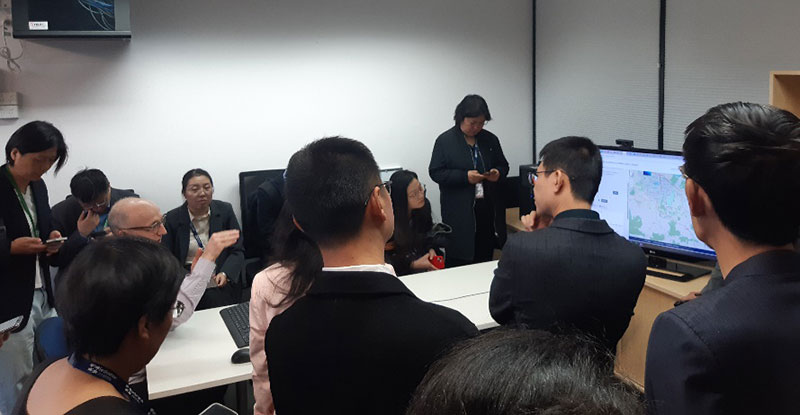
Above. CeRDI’s Richard Archer demonstrates Rainfall Mapper to the Delegation
Birds, Litter and Citizen Science feature on ABC Radio
 |
|
|
PhD student |
|
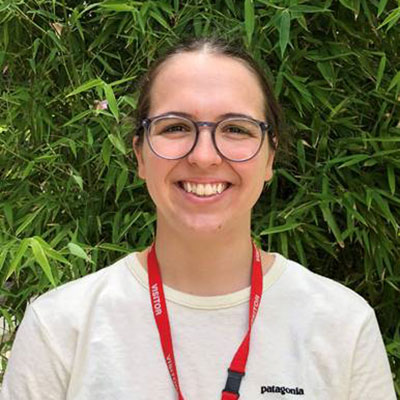
CeRDI PhD student Hannah Faraone recently joined ABC Statewide Drive to chat about her research-and all things birds and litter. Hannah is leading an exciting citizen science project exploring how litter affects native birdlife across Australia and beyond.
During the interview, Hannah shared some fascinating insights into the surprising ways birds use rubbish in their habitats, the serious threats litter poses, and how everyday citizen scientists are helping uncover the bigger picture through the Litter Bird-en project .
Missed the interview? Catch up here (starts around 2:25mns).
-
Continue reading...
Want to get involved in this research? If you’ve snapped photos of birds interacting with litter, upload them and contribute to the research:
CeRDI’s Peter Weir was also interviewed on ABC Radio’s Country Hour (11 November) talking about the Rainfall Mapper tool and how it’s helping communities access vital climate data. The story was featured widely across ABC Radio, with additional interest in the research leading to significant television and press coverage, nationally.
Missed Peter’s interview? Catch up here
(starts around 34:30 mins).If you want to learn more about Peter’s Phd research visit Peter’s profile page on the CeRDI website.
Staff Profiles
 |
|
|
Dr Ross Mann, |
|
Dr Ross Mann, Program Manager
Ross joined the CeRDI team in October 2025, bringing over 20 years of experience in agricultural science across diverse roles with organisations including with Meat & Livestock Australia (MLA), Agriculture Victoria and NEOM (Saudi Arabia). He has a PhD from La Trobe University focused on metabolomics and genomics of fungal endophytes.
Ross has extensive expertise across horticulture, livestock, dairy and grains, specialising in sustainable practices to address productivity constraints - beneficial microbes, biosecurity (pests, pathogens and weeds), ag chemistry and agronomy. He has a comprehensive publication record and a suite of related patents in his field. At CeRDI Ross is supporting partnerships and projects across our Natural Capital program and managing projects on pasture dieback for the livestock sector.
-
Continue reading...
Carmel Wallis, Technical Writer
Carmel Wallis is a Technical Writer with the Australian Research Data Commons (ARDC), based at the CeRDI. She develops materials that explain and connect ARDC’s strategic priorities and technical programs.
Carmel joined Federation in September 2025 after working in international relations at the European Molecular Biology Laboratory (EMBL), where she managed relationships with government, scientific, and philanthropic partners to support EMBL’s life science missions. Based at EMBL’s UK site - the European Bioinformatics Institute - she developed a strong interest in data, digital research infrastructure, and national and international data policy.
Previously, Carmel held multiple senior policy and project roles in the Victorian Government, including with Youth Justice at the Department of Justice and Community Safety.
Carmel holds a Bachelor of Science in Developmental Biology and a Bachelor of Arts in International Relations and Literature.
Email: carmel.wallis@federation.edu.au

Mohammad Saud,
Digital Content and
Communications,
Co-Op PlacementMohammad Saud, Digital Content and Communications, Co-Op Placement
Mohammad joined CeRDI in October 2025 as a Digital Content and Communications Officer. He is currently completing a Bachelor of Information Technology, majoring in Data Analytics, at Federation University Australia.
Mohammad brings experience working in digital platform management, mobile app development (e.g., health tech applications) and multimedia content creation that translates research and data into accessible public stories. He has also contributed to the NASA Space Apps Challenge, working on projects that transform complex technical data into meaningful insights for broader audiences.
As part of his Co-Op placement at CeRDI, Mohammad is enhancing the CeRDI’s digital presence through digital content strategy, storytelling, stakeholder engagement and website content development. He collaborates with project teams and researchers to promote CeRDI’s work across environmental, spatial, and community-based research initiatives.
Through this role, Mohammad aims to build a career that combines technology, analytics, design-development and data storytelling to make research more accessible and impactful. He is particularly interested in how technology, spatial data, and visualisation can be used to communicate environmental research and promote community engagement across regional and national projects.
Email: mohammad.saud@federation.edu.au
Esther Rosenberg,
Soil Data Stewardship,
Co-Op placementEsther Rosenberg, Soil Data Stewardship, Co-Op placement
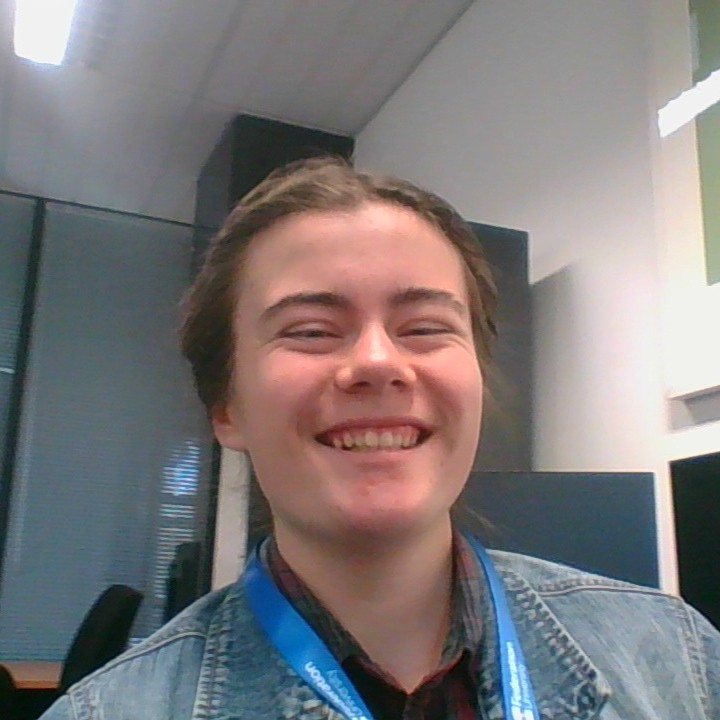
Esther is studying a Bachelor of Environmental and Conservation science at Federation University and commenced a Co-op placement with CeRDI in November 2025 as part of her studies. She brings experience with data management systems from her work as a school librarian, along with volunteer involvement with various conservation and research projects across Victoria and New South Wales.
Looking ahead, Esther hopes to become more involved with research and on-the-ground environmental conservation and restoration projects. She has a keen interest in making data accessible and useful for the broader community.
At CeRDI, Esther is working with researchers to build and maintain high-quality datasets for the Visualising Australasia’s Soils project. In this role, she aims to develop skills in data analysis and management, Geographic Information Systems (GIS), research, and teamwork while deepening her understanding of soil data and its application in future research, conservation projects, and sustainable agriculture.
News snippets
 |
|
Science Data Conference: Interoperable and federated vocabulary services: International Data Week (13-16 October) featured the Science Data Conference in Brisbane as its centrepiece. During the event, CeRDI and ARDCs Dr Megan Wong and colleagues led a session exploring solutions and future directions for interoperable and federated vocabulary services—an essential element of modern data-sharing infrastructures.
Vocabularies are a core part of delivering FAIR data, giving meaning to data that enables its reuse and integration across domains, including for AI applications. The session highlighted key initiatives and reflections from global leaders, including FAIR-IMPACT (EU), NERC Vocabulary Server (British Oceanographic Data Centre), the Open Geospatial Consortium, Kurrawong AI, GoFAIR (US) and TS4NFDI.
Further information and the slide deck from the session are available here .
-
Continue reading...
Kyoto University Seminar: International Collaboration on Migratory Bird Conservation
CeRDI’s Dr Birgita Hansen recently presented an online seminar hosted by Kyoto University’s School of Law, alongside colleagues Dr Evan Hamman (University of Canberra) and Dr Maddy Sbeghen (Federation University / University of Melbourne). The seminar explored the Japan-Australia Migratory Bird Agreement (JAMBA) and broader environmental law and policy.
Birgita shared insights on Latham’s Snipe as a case study, highlighting how the agreement influenced conservation efforts - culminating in Victoria becoming the final state to implement a close on the snipe hunting season in 1983.
This collaboration is set to continue, with Japanese legal scholars visiting Canberra in February 2026. Plans are underway for a follow-up workshop focused on Australian and Japanese environmental law.
CeRDI SeminarsThank you to Dr Maddy Sbeghen and Associate Professor David Waldron for delivering engaging and insightful research presentations at the October and November CeRDI seminars.
Dr Sbeghen shared findings from research into the impact and implementation of the Japan-Australia Migratory Bird Agreement, tracing conservation outcomes for the Latham’s Snipe.
From the history discipline, Associate Professor Waldron explored the art of storytelling through digital histories, highlighting innovative approaches to preserving and sharing historical narratives.
Federation University Partners with Ross Creek Landcare Group to protect wetlands at Woady Yaloak Primary SchoolDr Birgita Hansen has been working closely with Ross Creek Landcare Group to promote an important wetland environment supporting bird conservation at Woady Yaloak Primary School’s Ross Creek Campus. Originally designed as a frog habitat, the wetlands, adjacent to the school, have become an important refuge for the Latham’s Snipe, a unique migratory bird now monitored as part of a national program.
Birgita provided expert advice on the bird hide design for the wetlands and continues to support the Landcare Group and the school through this initiative. She recently attended the community opening of the wetlands and the purpose-built bird hide overlooking the site. Construction of the bird hide was funded generously by the Buninyong Community Bank.
Birgita’s involvement with the project demonstrates the importances of strong partnerships between the University and its local community - creating conservation awareness and supporting environmental education.
Moth Tracker: Each spring, endangered Bogong Moths start an amazing migration across Australia to our alpine zone. At the same time, Mountain Pygmy-possums wake up from hibernation hungry for nutritious Bogong Moths to eat. But over recent years, Bogong Moths have not been arriving to the alpine regions in the numbers needed, raising concern for the survival of the moths and leaving the Mountain Pygmy-possums without their primary food source. We’re helping @ZoosVictoria scientists track where they are and when they might arrive.If you see a Bogong Moth, or a moth you think could be a Bogong Moth, take a photo and upload to Moth Tracker. It’s quick and easy, and will help scientists better understand how to help the moths and if they will make it to the alpine mountains this year. Learn more: www.zoo.org.au/moth-tracker/
CeRDI is a long term partner with Zoos Victoria following the development of the Moth Tracker technologies that support citizen science initiatives associated with wildlife conservation.
Recent publications:Lai, Y., Ojeda, J., Clarendon, S., Robinson, N., Wang, E., & Pembleton, K. (2025). Linking measurable and conceptual phosphorus pools (in APSIM) enables quantitative model initialization. Soil and Tillage Research, 251, doi.org/10.1016/j.still.2025.106532
Nodi, S.S., Paul, M., Robinson, N., Wang, L., Rehman, S., & Kabir, M.A. (2025). Munsell Soil Colour Prediction from the Soil and Soil Colour Book Using Patching Method and Deep Learning Techniques. Sensors 25, 287. doi.org/10.3390/s25010287
Wong, M., Simons, B., Gillet, H., Robinson, N.J., Neyland, A., Dahlhaus, P., MacLeod, A., & Thompson, H. (2025). An observations framework for data interoperability: Enabling descriptive regional data for soil and land management in the Australian context. Geoderma Regional, e01029. doi.org/10.1016/j.geodrs.2025.e01029
HDR news
 |
|
|
Peter Weir receives his PhD testamur from |
|
PHD Graduation: Dr Peter Weir
Congratulations to Dr Peter Weir, who graduated in October with a PhD. Peter began his doctoral studies at CeRDI in February 2020, focusing on developing a conceptual model to predict within-paddock variability in plant-available water (PAW) using existing spatio-temporal data. His model incorporated publicly available datasets, including satellite imagery, landscape metrics, soil moisture measurements, digital soil data, and meteorological information.
Peter completed his PhD through Federation University, under the supervision of Associate Professor Peter Dahlhaus (principal supervisor), with associate supervisors Dr Nathan Robinson and Associate Professor Peter Vamplew.
-
Continue reading...
Peter’s PhD research has informed the development of Rainfall Mapper (see earlier story in this issue), an innovative tool giving farmers insights about rainfall variations on their properties. Peter has also published widely from his PhD research in peer-reviewed journal papers:
Weir, P., & Dahlhaus, P (2024). Beyond soil moisture probes: improving field scale soil moisture mapping. Discover Soil 1, 25 (2024). doi.org/10.1007/s44378-024-00025-0
Weir, P., & Dahlhaus, P. (2024). Merging weather radar and rain gauges for dryland agriculture. Journal of Southern Hemisphere Earth Systems Science, 74, ES23023. doi.org/10.1071/ES23023
Weir, P., & Dahlhaus, P. (2023). In search of pragmatic soil moisture mapping at the field scale: a review. Smart Agricultural Technology, 6, 100300. doi.org/10.1016/j.atech.2023.100330
Peter’s research was supported by an Australian Government Research Training Program (RTP) Fee-Offset Scholarship through Federation University Australia and by the Cooperative Research Centre for High Performance Soils, funded by the Australian Government’s Cooperative Research Centre Program.
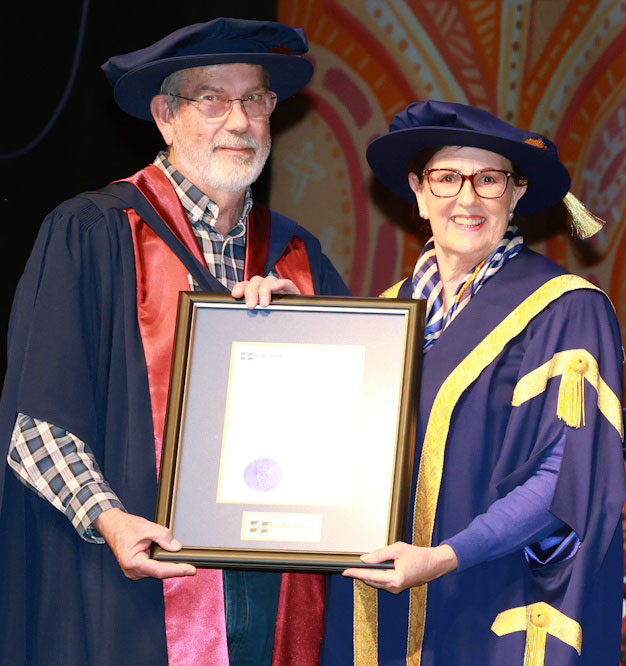
Above: Peter Weir receives his PhD testamur from Deputy Chancellor Rhonda Whitfield.
CeRDI HDR candidates showcase their research
In September, CeRDI PhD candidates Hannah Faraone and Pramod Gautam presented their latest work as part of the CeRDI seminar series. Hannah discussed her quantitative review of bird-litter interactions, focusing on the role of avian functional traits. Pramod explored farmers’ perspectives on net-zero agriculture and the use of decision support tools to inform sustainable practices. PhD candidates Rob Clark and Rida Mazhar also provided updates on their research at the August CeRDI seminar. See the Winter newsletter for more information.
About CeRDI
The Centre for eResearch and Digital Innovation (CeRDI) is a research centre at Federation University Australia focused on:
- the application of information and communications technology (ICT) and the development of innovative, world class knowledge management systems;
- significantly advancing the digital literacy and knowledge management capabilities of partner organisations;
- fostering partnerships for the development and implementation of eResearch with industry, government and academia; and
- measuring the impact of eResearch and digital innovation through longitudinal research.
Contact CeRDI
For further details about CeRDI’s diverse portfolio of research please visit our website: www.cerdi.edu.au, or contact Director, Associate Professor Helen Thompson: h.thompson@federation.edu.au
Mailing Address
Centre for eResearch and Digital Innovation
Federation University Australia
PO Box 691
Ballarat Vic 3353
Office Location
Suite 15, Greenhill Enterprise Centre
Ballarat Technology Park
University Drive
Mount Helen Vic 3350
Phone: +61 3 5327 9314
Email: support@cerdi.edu.au
Subscribe to the CeRDI Newsletter Mailing List
I would like to subscribe to the CeRDI Newsletter Mailing List to receive notifications of future CeRDI Newsletters.
If you have any feedback, please email newsletter@cerdi.edu.au